
Cyber threats no longer stop at the network perimeter. Today, attackers target brands wherever they have a digital presence, websites, social media, mobile apps, email, cloud platforms, and even the dark web. From phishing websites and fake social media profiles to credential leaks and domain impersonation, these attacks can erode customer trust, disrupt business operations, and cause significant financial losses.
As organizations expand their digital footprint, protecting the brand has become just as important as protecting the infrastructure. This is where Digital Risk Protection plays a critical role.
However, with a growing number of digital risk protection vendors and companies in the market, choosing the right solution can be challenging. This guide explains what brand protection means in cybersecurity, the threats businesses face, and the key factors to consider when evaluating a Digital Risk Protection provider.
What is Brand Protection in Cybersecurity?
Brand protection in cybersecurity refers to the continuous monitoring, detection, and mitigation of online threats that misuse or impersonate an organization’s brand, executives, products, or digital assets.
Unlike traditional cybersecurity solutions that focus on securing internal systems, Digital Risk Protection extends security beyond the enterprise. It identifies threats across the open web, deep web, dark web, social media platforms, messaging applications, app stores, and third-party websites.
A robust Digital Risk Protection solution helps organizations:
- Detect phishing websites using the company’s brand
- Identify fake social media accounts
- Monitor domain impersonation and typosquatting
- Detect leaked employee or customer credentials
- Monitor dark web marketplaces for stolen data
- Identify counterfeit mobile applications
- Protect executive identities from impersonation
- Remove malicious content through takedown services
Ultimately, brand protection safeguards customer trust, business reputation, and revenue.
Common Threats That Target Brands, Customers, and Digital Assets
Modern cybercriminals continuously exploit trusted brands to deceive customers and employees. Some of the most common threats include:
- Phishing and Fake Websites
Attackers create lookalike websites that imitate legitimate brands to steal login credentials, payment information, or sensitive customer data.
These websites often use similar domain names, logos, and website designs, making them difficult for users to identify.
- Domain Impersonation and Typosquatting
Cybercriminals register domains with slight variations in the spelling of legitimate websites.
For example:
- company-security.com
- company-secure.com
- companny.com
These fake domains are used for phishing campaigns, malware distribution, and business email compromise (BEC).
- Fake Social Media Accounts
Fraudsters frequently create fake company pages or executive profiles to spread scams, collect customer information, promote fraudulent offers, or damage brand reputation.
Customers often struggle to distinguish legitimate accounts from fake ones.
- Credential Leaks
Compromised employee or customer credentials are frequently traded on underground forums and dark web marketplaces.
If left undetected, these credentials can lead to account takeovers, ransomware attacks, and unauthorized access.
- Counterfeit Mobile Applications
Fake mobile apps imitate genuine applications to distribute malware or steal user credentials.
These apps can appear in unofficial app stores or even legitimate marketplaces before being removed.
- Executive Impersonation
Cybercriminals increasingly impersonate CEOs, executives, or senior management through fake emails, messaging platforms, and social media accounts to execute financial fraud or phishing attacks.
- Data Exposure on the Dark Web
Sensitive corporate information, customer databases, intellectual property, and confidential documents are often sold on dark web forums following security breaches.
Continuous monitoring enables organizations to respond before attackers exploit exposed information.
How Businesses Can Detect and Prevent Brand Abuse
Protecting a brand requires continuous visibility across the digital ecosystem rather than relying solely on internal security tools.
Organizations should implement the following measures:
- Continuous Digital Monitoring
Monitor:
- Open web
- Deep web
- Dark web
- Social media
- Domain registrations
- Mobile app stores
- Messaging platforms
Continuous monitoring enables security teams to detect threats early before they affect customers.
- Domain Monitoring
Track newly registered domains that resemble your organization’s name or trademarks.
Early detection helps prevent phishing campaigns before they gain traction.
- Brand Abuse Detection
Monitor unauthorized use of:
- Logos
- Trademarks
- Product images
- Marketing content
- Executive identities
This enables faster identification of counterfeit websites and fraudulent campaigns.
- Credential Monitoring
Monitor dark web forums and underground marketplaces for leaked employee credentials.
Early alerts allow organizations to reset passwords and prevent unauthorized access.
- Takedown Services
Once malicious content is identified, organizations should initiate takedown requests for:
- Phishing websites
- Fake domains
- Fraudulent social media accounts
- Counterfeit mobile applications
Fast remediation minimizes customer exposure.
- Threat Intelligence Integration
Digital Risk Protection should integrate with existing security platforms such as:
- SIEM
- SOAR
- EDR
- XDR
- SOC workflows
This allows security teams to investigate and respond to threats more efficiently.
Best Practices for Strengthening Brand Trust and Reputation
While technology is essential, organizations should also adopt proactive strategies that reduce digital risk.
- Develop a Brand Protection Strategy
Create policies for monitoring brand abuse, executive impersonation, phishing campaigns, and domain registrations.
Assign ownership across cybersecurity, legal, marketing, and compliance teams.
- Educate Customers
Regularly inform customers about:
- Official communication channels
- Verified social media accounts
- Safe online practices
- How to identify phishing attempts
Customer awareness significantly reduces successful attacks.
- Monitor Executive Exposure
Executives are prime targets for impersonation attacks.
Regular monitoring helps identify fake profiles, fraudulent communications, and leaked executive information before they escalate.
- Maintain Continuous Visibility
Brand abuse can occur at any time.
Continuous monitoring provides real-time visibility into emerging threats rather than relying on periodic assessments.
- Measure Risk Trends
Track metrics such as:
- Number of phishing sites detected
- Fake domains removed
- Credential leaks identified
- Average takedown time
- Brand impersonation incidents
These metrics help evaluate program effectiveness and identify emerging risks.
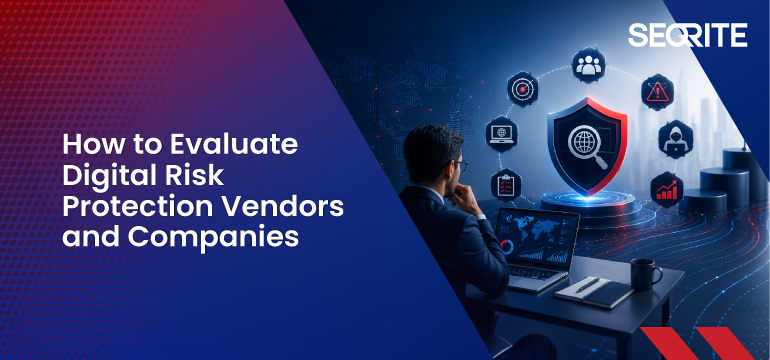
How to Evaluate Digital Risk Protection Vendors and Companies
With numerous digital risk protection vendors offering similar capabilities, selecting the right solution requires more than comparing feature lists. Organizations should assess how effectively a provider can detect, prioritize, and remediate risks across the entire digital ecosystem.
When evaluating digital risk protection companies, consider the following criteria:
- Comprehensive Monitoring Coverage
Choose a solution that monitors:
- Open web
- Deep web
- Dark web
- Social media platforms
- Mobile app stores
- Domain registrations
- Messaging channels
Comprehensive visibility ensures threats are detected wherever they emerge.
- AI-Powered Threat Detection
Look for solutions that leverage artificial intelligence and machine learning to identify phishing campaigns, impersonation attempts, and emerging threats with minimal false positives.
- Automated Takedown Capabilities
Detection alone is not enough. Leading providers offer streamlined takedown services for phishing sites, fake domains, counterfeit apps, and fraudulent social media profiles, helping reduce the time threats remain active.
- Actionable Threat Intelligence
Prioritize vendors that provide contextual intelligence rather than overwhelming security teams with alerts. Risk scoring, threat prioritization, and detailed evidence enable faster investigations and more effective responses.
- Integration with Existing Security Tools
The platform should integrate seamlessly with SIEM, SOAR, EDR, XDR, and ticketing systems to support coordinated incident response and operational efficiency.
- Executive and VIP Protection
Ensure the solution can monitor executive impersonation, credential exposure, and targeted attacks against high-profile individuals within the organization.
- Regulatory and Compliance Support
Organizations operating in regulated industries should verify whether the solution supports compliance initiatives by helping identify exposed sensitive data and digital risks that could lead to regulatory issues.
- Vendor Expertise and Global Reach
Evaluate the provider’s experience in handling large-scale takedowns, global threat intelligence, multilingual monitoring, and support across multiple regions. Strong research capabilities and a dedicated threat intelligence team are indicators of a mature solution.
Conclusion
Digital threats increasingly target an organization’s reputation as much as its infrastructure. Phishing websites, fake domains, social media impersonation, credential leaks, and counterfeit applications can erode customer trust long before they compromise internal systems.
Choosing among today’s digital risk protection vendors requires evaluating monitoring coverage, threat intelligence, automation, integration capabilities, and remediation services. The best digital risk protection companies don’t just detect threats; they help organizations act quickly to minimize business impact.
By investing in a comprehensive Digital Risk Protection solution and following proactive brand protection practices, businesses can safeguard their reputation, protect customers from online fraud, and strengthen digital trust in an increasingly connected world.