
Seqrite Labs recently identified a CLoader bot malware campaign targeting organizations and individuals in Thailand through spear-phishing emails. The attacker employs a multi-stage infection chain to deliver the CLoader bot malware. Malware leverages several anti-analysis and defense-evasion techniques to evade endpoint security solutions and hinder malware analysis. Notably, it uses a LuaJIT executable bundled with an obfuscated Lua script to conceal its malicious activities and reduce the likelihood of detection.
Execution flow: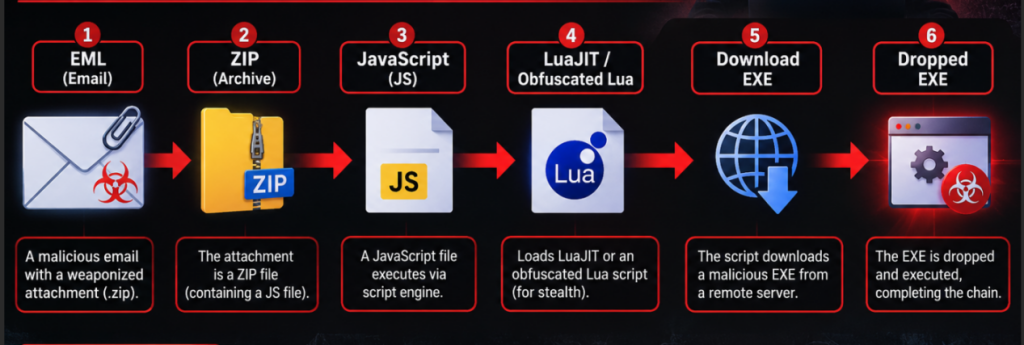 Technical Analysis:
During our routine threat-hunting activity, we came across a spear phishing email which delivers Cloader Bot malware.
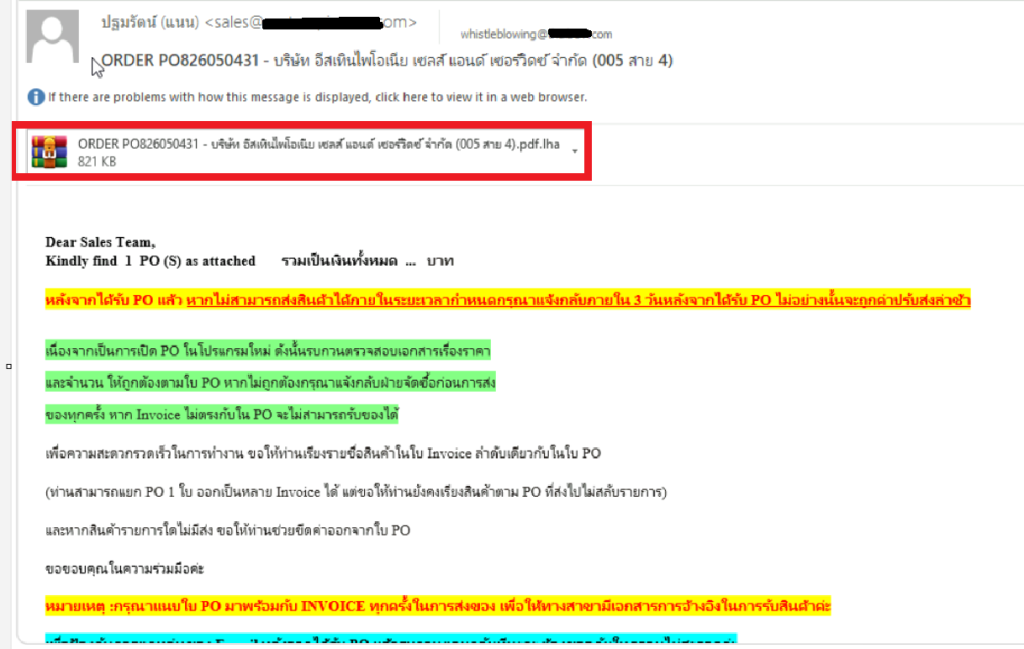

Fig 1: Phishing email with attached obfuscated javascript malware
The threat actor distributed an obfuscated JavaScript malware file through an email attachment disguised as a legitimate PDF document. The malicious archive was named as “ORDER PO826050431 – บริษัท อีสเทินไพโอเนีย เซลส์ แอนด์ เซอร์วิดซ์ จำกัด (005 สาย 4).pdf.lha”. Upon extracting the archive, it contained an obfuscated JavaScript file named “ORDER PO826050431 – บริษัท อีสเทินไพโอเนีย เซลส์ แอนด์ เซอร์วิดซ์ จำกัด (005 สาย 4).pdf.JS”.
The threat actor leveraged a double-extension technique to disguise the malicious archive and JavaScript payload as a PDF document, potentially deceiving recipients into believing the attachment was a legitimate business-related file and encouraging them to execute the malicious script.
The use of an obfuscated JavaScript payload further indicates an attempt to conceal the underlying script logic and potentially evade detection by security solutions.
Malicious JavaScript:

Fig 2: Dropped obfuscated javascript
This malicious JavaScript serves as the initial execution vector and drops the LuaJIT executable along with the obfuscated Lua script into the “C:\Users\username\Documents” .
File 1: KYDMJCZEZZGRHWZO[md:md5:7675B38AABEBC8427171447EDD484B5B] – A standalone build of the LuaJIT executable (version 2.1.0-beta3). LuaJIT (Lua Just-In-Time Compiler) is a software engine designed to execute programs written in the Lua programming language.
File 2: OZWHRGZZEZCJMDYK[md5:33F89E204BED98973A602C99DAA92AB1] –A highly obfuscated malicious Lua script, which contain the malicious code.
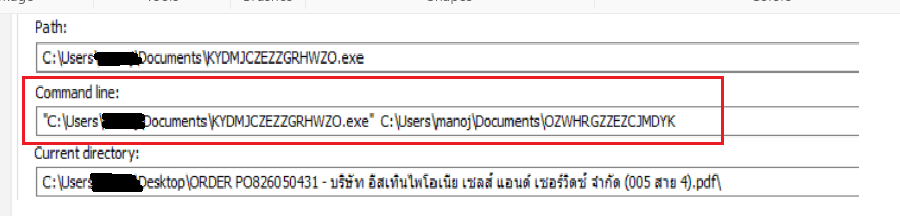
Fig 3: JavaScript initial execution by passed argument
The dropped LuaJIT executable is then used as an interpreter to execute the malicious Lua script, potentially facilitating the execution of the malware’s subsequent activities.

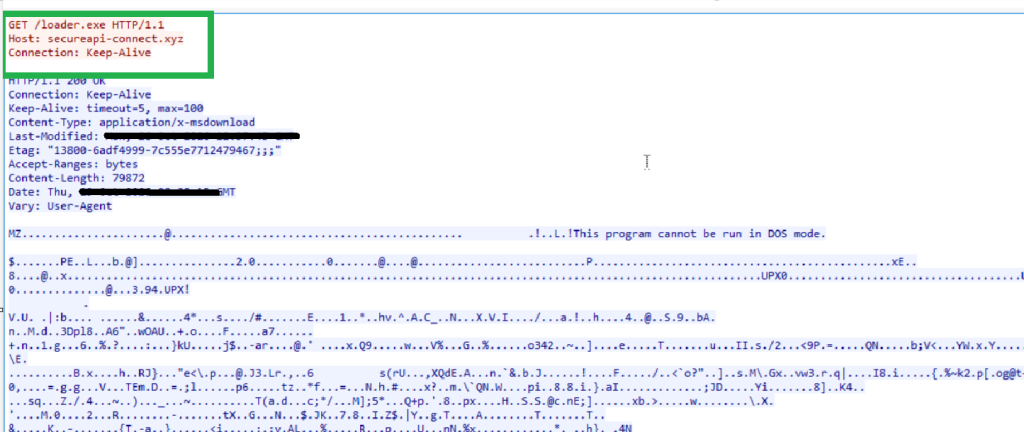
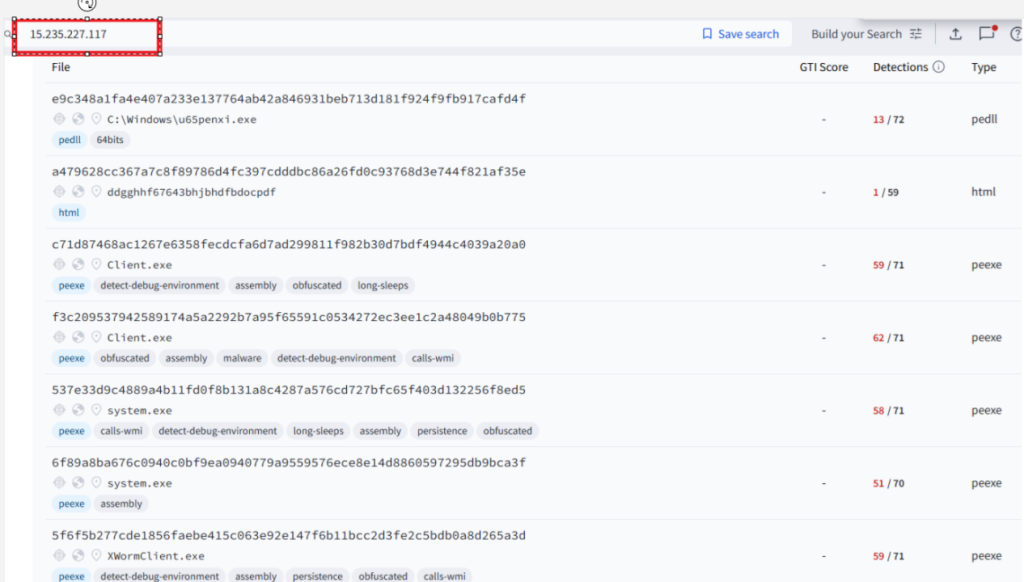
During the investigation, the malware was observed establishing an initial connection with the C2 IP address 31.56.209.48. Following successful communication with the initial C2 server, the malware initiates a secondary connection to the domain secureapi-connect[.]xyz, which resolves to the IP address 15.235.227.117.
The secondary C2 infrastructure is used to download additional malicious binary payloads, which are subsequently saved in the following directory:
C:\Users\username\AppData\Local\Temp
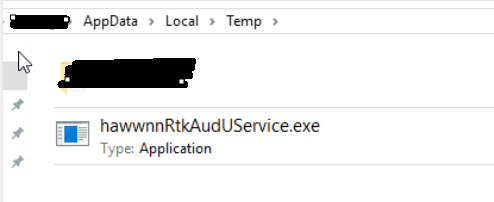
We observed that the malware dynamically changes the filenames of the downloaded payloads during each execution. Examples of observed filenames include:
- exe
- exe
- exe
This dynamic filename generation may be intended to evade signature-based detection, complicate forensic analysis, and hinder the identification of malicious files across multiple executions.
hawwnnRtkAudUService.exe
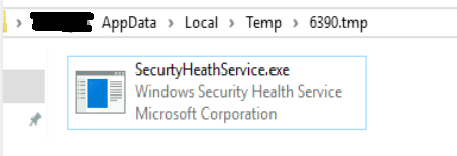
Fig 6: CLOADER malware dropped in the Temp location
The file downloaded from the C2 domain was packed by the UPX packer. Upon unpacking and further analysis, we identified that the threat actor had concealed the final Bot payload within the PE resource section in an obfuscated format. During execution, the malware decodes the embedded payload directly in memory, reconstructs it as an executable binary, and subsequently drops it to the following location:
C:\Users\<username>\AppData\Local\Temp\[4-letter random alphanumeric].tmp\SecurtyHeathService.exe
The attacker employs multiple techniques to evade security detection, including UPX packing, embedding obfuscated malicious code within the resource section, and dynamically decoding the payload at runtime. Furthermore, the use of a filename resembling a legitimate Windows service component, SecurtyHeathService.exe, appears intended to disguise the malicious executable as a legitimate system-related file and reduce the likelihood of detection by security products.
SecurtyHeathService.exe
File hash:C364C0984617D7332B5D83C5CF16B15E

Upon execution, it creates a mutex named CLOADER_MUTEX_1_1_1_7 to check whether another instance of the bot is already running. If another instance is detected, the current execution is terminated to prevent multiple instances from running simultaneously.
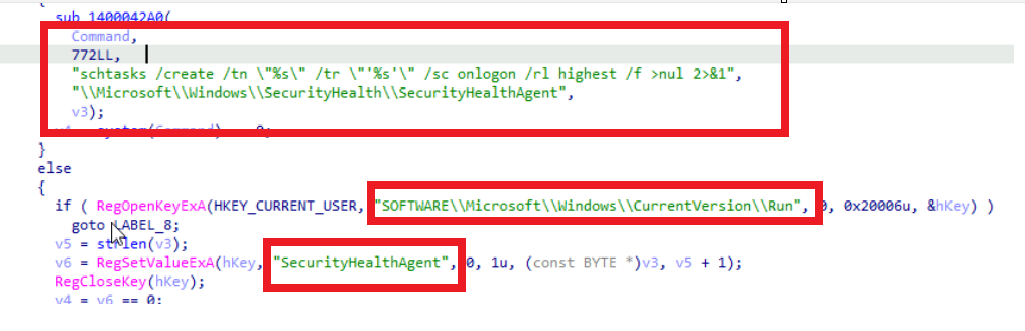
It achieves persistence by creating a scheduled task and configuring a Registry Run key to ensure continued execution. It is masquerading as the legitimate Windows component SecurityHealthAgent.

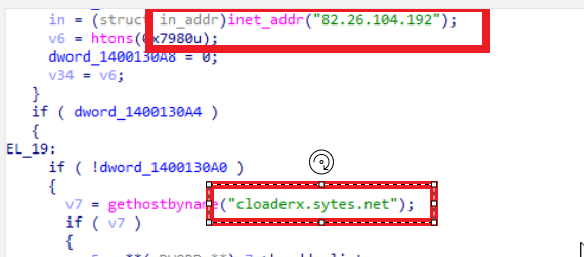
Fig 9: Command-and-Control (C2) Communication of CLOADER malware
This malware retrieves its primary C2 configuration from a Paste bin-hosted resource (https://pastebin.com/raw/bts1Yn4Z). It also maintains a secondary communication channel with cloaderx[.]sytes[.]net, resolving to the IP address 82.26.104.192 over TCP port 31104. These communication channels enable the malware to receive commands and retrieve additional payloads from its remote infrastructure.
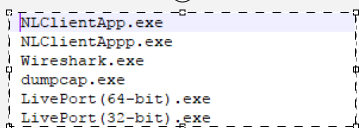
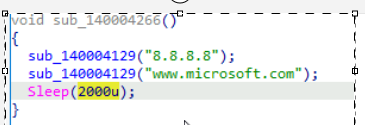
Fig 10: CLOADER malware detects tool and make fake traffic
It verifies whether analysis tools are running. If it is active, the threat actor establishes a fake connection to Microsoft.com
It exhibits several malicious capabilities, including command-and-control (C2) communication, persistence, defence evasion, and remote code execution. To evade detection, the malware leverages PowerShell commands, such as Add-MpPreference, to add itself to Windows Defender exclusion lists. It also monitors for security analysis and debugging tools to modify its behavior and avoid detection. Furthermore, it supports multiple execution mechanisms, including PSRUN, BYRUN, and RUNFILE, which enable it to download and execute additional payloads from its C2 server.
- PSRUN: Supports command execution through PowerShell.
- BYRUN: Provides an additional execution mechanism for attacker-supplied commands or payloads.
- RUNFILE: Supports downloading and executing files obtained from the C2 infrastructure.
IOCS:
86C7D9BE4B565F4EB73367DF883BB9C5
33F89E204BED98973A602C99DAA92AB1
603A3DFA921D1C6E585E9A435C823884
C364C0984617D7332B5D83C5CF16B15E
Detections:
Trojan.AgentCiR
MITRE ATTACK TTPs:
| Tactic | Technique / Procedure |
| Initial Access | T1566.001: Phishing: Spear phishing attachment |
| Execution | T1059.007: Command and Scripting Interpreter: JavaScript |
| T1059.011: Command and Scripting Interpreter: Lua | |
| Persistence | T1547.001: Boot or Logon Autostart Execution: Registry Run Keys/ Startup Folder |
| Defense Evasion | T1027..013: Obfuscated Files or Information: Encrypted/Encoded File |
| T1036: Masquerading | |
| Defense Impairment | T1685: Disable or Modify Tools |
| Discovery | T1082: System Information Discovery |
| T1083: File and Directory Discovery | |
| T1057: Process Discovery | |
| Command and Control | T1105: Ingress Tool Transfer |
| T1071: Application Layer Protocol |
Conclusion:
Based on the observation, this sample demonstrates the capabilities of a Windows malware loader with integrated bot functionality. Its use of external C2 infrastructure, Pastebin based configuration retrieval, registry and scheduled-task persistence, Microsoft Defender exclusion manipulation, and remote payload execution makes it a significant threat to compromised Windows environments . Organizations should investigate the identified indicators, review suspicious scheduled tasks and registry Run entries, monitor unexpected PowerShell activity, and inspect outbound connections to the identified C2 infrastructure.
Authors:
-
Manoj Kumar Neelamegam
- Rumana Siddiqui