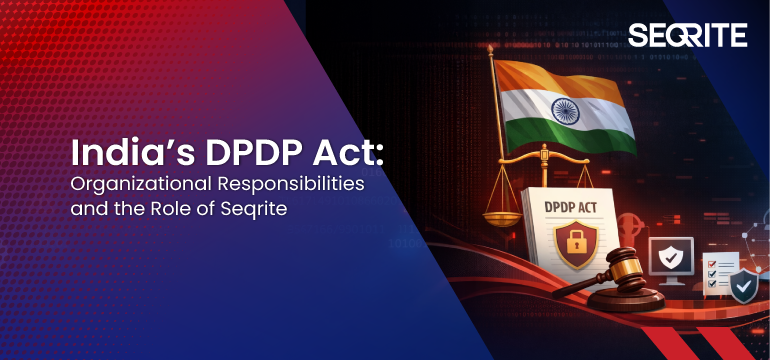

India’s Digital Personal Data Protection (DPDP) Act fundamentally changes how organizations collect, use, store, and protect personal data. It applies to any organization handling digital personal data of individuals in India, regardless of where the organization is located.
For businesses, DPDP is not just a legal obligation. It is about risk reduction, accountability, and customer trust. To comply effectively, organizations must move beyond policy documents and enforceable data protection controls are in place.
What Is the DPDP Act?
The DPDP Act governs the processing of personal data in digital form. Its objective is to ensure that personal data is:
- Collected lawfully
- Used only for a defined purpose
- Adequately protected
- Shared in a controlled manner
- Auditable and accountable
Under DPDP, organizations are responsible for how personal data is collected and protected across endpoints and systems.
What Is Considered Personal Data?
Personal data under DPDP includes any information that can identify an individual, such as:
- Aadhaar, PAN, Voter ID, Passport
- Phone numbers and email IDs
- Financial, payroll, and employee records
- Customer and transaction-related data
In most organizations, this data primarily resides and moves through endpoints i.e, employee laptops, emails, USB drives, shared folders, and cloud applications. Making endpoint-level control critical.
What Organizations Must Take Care Under DPDP
- Lawful Processing & Purpose Limitation
Organizations must clearly define the purpose for collecting personal data and ensure it is not used beyond that purpose. Unrestricted access or reuse of personal data across departments increases the risk of misuse, over-collection, and unauthorized sharing, which can directly lead to regulatory violations and data breaches.
- Prevent Unauthorized Sharing of Personal Data
Personal data must not be freely shared through email, removable media, personal cloud storage, or unauthorized applications. Accidental sharing by employees or misuse by insiders remains one of the most common causes of data leaks, making preventive controls essential rather than reactive measures.
- Implement Reasonable Security Safeguards
DPDP requires organizations to implement “reasonable security safeguards” to protect personal data. This means relying on technical enforcement, not just written policies to prevent exposure, misuse, or loss of sensitive information. In the event of a breach, organizations must be able to demonstrate that protective controls were actively enforced.
- Detect, Investigate, and Respond to Breaches
Organizations must be capable of detecting personal data incidents quickly and investigating how the breach occurred. Without real-time visibility and detailed logs, incident response becomes slow and ineffective, increasing regulatory, financial, and reputational impact.
- Enable Data Principal Rights
DPDP grants individuals the right to access, correct, and erase their personal data. Without centralized discovery and tracking, fulfilling these requests across multiple endpoints becomes operationally complex and error-prone, increasing compliance risk.
Why Endpoint Protection (EPP) Alone Is Not Enough
Endpoint Protection Platforms (EPP) are designed to protect systems from malware, ransomware, exploits, and unauthorized access. While essential, EPP focuses on threat prevention, not data usage control.
EPP does not prevent scenarios such as:
- An employee emailing PAN or Aadhaar details to an external recipient
- Copying payroll data to a USB drive
- Uploading customer data to personal cloud storage
- Sharing sensitive files with unauthorized users
DPDP requires organizations to protect the data itself, not just the endpoint. This gap makes Data Loss Prevention (DLP) a critical requirement.
Why DLP Is Essential for DPDP Compliance
Data Loss Prevention focuses on identifying, monitoring, and controlling personal data as it is accessed, shared, or transferred. Without DLP, organizations cannot enforce purpose limitation, prevent accidental leaks, or demonstrate compliance during audits.
In practical terms, DPDP compliance without DLP leaves organizations exposed to insider risk, human error, and audit failures.
How Seqrite EPP with DLP Helps Achieve DPDP Compliance
Seqrite combines Endpoint Protection Platform (EPP) with Data Loss Prevention (DLP) to deliver both security and compliance controls at the endpoint level.
- Discover and Classify Personal Data
Seqrite DLP detects Indian personal data such as Aadhaar, PAN, Voter ID, Passport, phone numbers, and email IDs using predefined classifiers, regex, and dictionaries. Data-at-Rest scans help identify where personal data exists across endpoints. This enables organizations to gain visibility into personal data locations a foundational requirement for DPDP compliance.
- Enforce Purpose-Based Data Usage
Seqrite allows organizations to define DLP policies aligned with business functions such as HR, Finance, and Legal. Controls can be applied based on endpoint, applications, file types, and data channels to ensure personal data is used only for its intended purpose. This reduces over-collection and prevents unauthorized reuse of sensitive data.
- Prevent Data Leakage at the Endpoint
Seqrite DLP enforces controls across endpoints, email, removable media, and network shares. Unauthorized data transfers can be blocked or monitored in real time, significantly reducing the risk of accidental or intentional data leakage. This ensures personal data does not leave the organization through uncontrolled channels.
- Strengthen Breach Detection and Audit Readiness
Seqrite provides real-time alerts, detailed incident logs, and exportable reports for investigations and audits. Organizations can trace who accessed, copied, or attempted to share personal data, enabling faster response and regulatory readiness. This supports DPDP breach notification and accountability requirements.
- Support Data Principal Rights
Using Data-at-Rest scans and identity-based searches, Seqrite helps organizations locate personal data linked to individuals. Deleted or restricted data can be monitored to prevent reappearance, supporting access, erasure, and grievance handling obligations.
Conclusion
DPDP compliance cannot be achieved through policies alone, it requires continuous visibility, control, and accountability over personal data.
While Endpoint Protection Platforms (EPP) secure systems against cyber threats, they do not control how personal data is accessed, used, or shared. Data Loss Prevention (DLP) fills this critical gap by ensuring personal data is handled lawfully and securely across endpoints and communication channels.
Together, Seqrite EPP with DLP provides a strong, practical foundation for DPDP compliance, helping organizations reduce regulatory risk, prevent data leakage, and build lasting trust with customers and regulators.